
NAPLES & SORRENTO: From Ashes to Arrest
By Adam ‘Grey’ CochraneBeneath the postcard perfect facades of Naples and Sorrento lie buried histories, cities built on the bones of older cities, artefacts sealed in ash, and stories long forgotten by time. This trip wasn’t just a holiday, it was a descent into ruins, both literal and personal, with every step revealing something lost… and something worth finding.
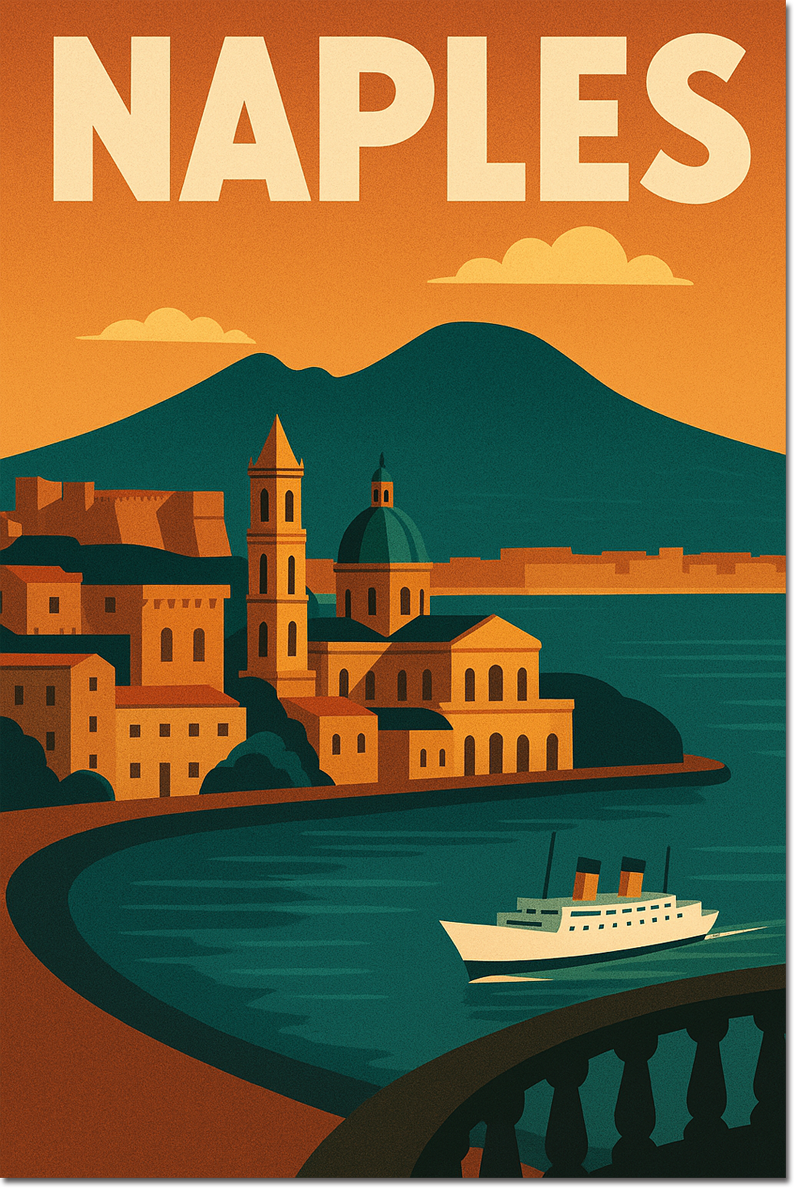
Day 1: From the UK to Naples
After a smooth flight and an easy time through security, we arrived in Naples from the UK without a hitch.
To be honest, I’d never given Naples much thought before—aside from its claims to pizza and gelato fame. But stepping into the city felt like flipping to a page I hadn’t read before. It's grittier, louder, and more chaotic than I imagined Italy could be—especially after my past experiences in Tuscany, Rome, and Sicily, which feel practically genteel by comparison.
We’re only staying one night, and I hadn’t done much research in advance, so with limited time and a long to-do list looming, there was one priority that couldn’t wait.
Naples is the birthplace of the modern pizza, and I figured there’s no better place to tick that box than right at the source. Tomorrow, we move on to Sorrento.
Field Note:
The classic Margherita pizza was reportedly created in Naples in 1889 to honour Queen Margherita of Savoy—with tomatoes (red), mozzarella (white), and basil (green) representing the Italian flag.
Day 2: Naples to Sorrento
At 6:30 a.m., a train louder than the rest thundered past our room waking us both up. As breakfast wasn’t for a few hours we decided to head out and explore Naples’ historic centre. Apparently, the entire area is a UNESCO World Heritage Site—though at first glance, you wouldn’t think so. Crumbling 14th-century wooden doors lay rotting under layers of graffiti, and that’s just one of a dozen details that left me wondering: what exactly is UNESCO doing for Naples these days?
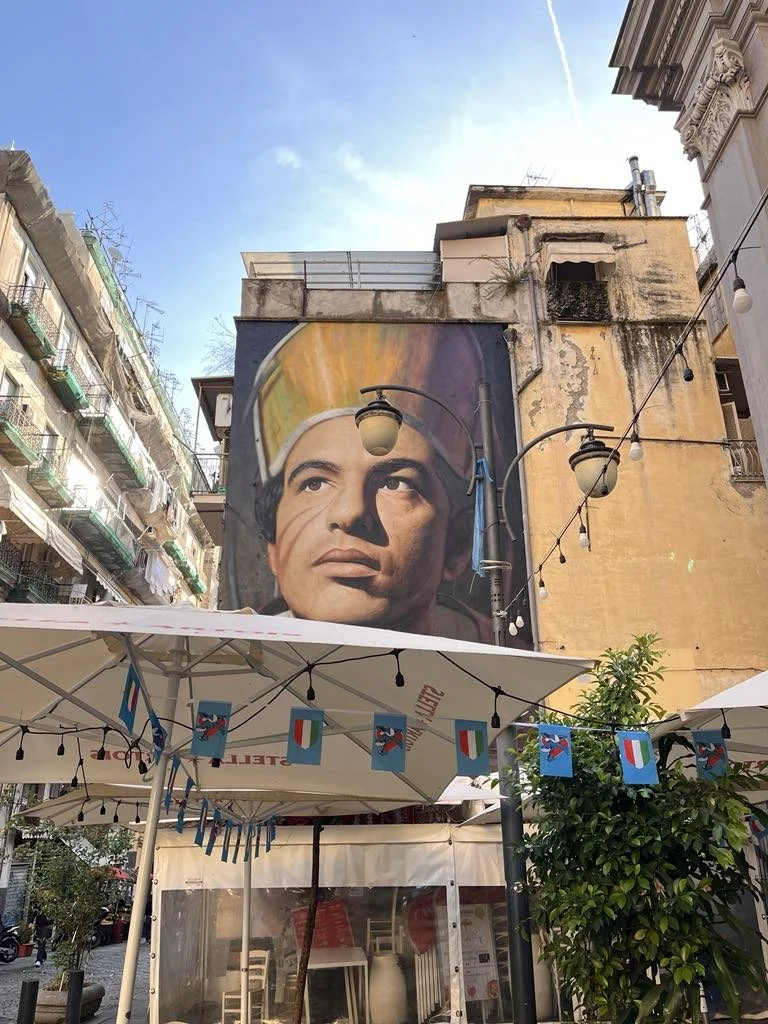
Still, the streets had character. As we walked deeper into the old city, we passed murals, shrines, t-shirts, and posters, all paying homage to Diego Maradona, Naples’ adopted god. One mural crowned him as the pope; another simply read, D10S, a play on his jersey number and the Spanish word for “God.” The reverence here is more than fandom. It’s devotion.
I’d heard whispers of hidden treasures and forgotten cities buried beneath Naples; legends common to ancient places, often exaggerated or entirely fictional. But something felt different here. Sure enough, as we wandered, I found several tour options promising access to Naples' subterranean world: tunnels, aqueducts, and ruins from both Greek and Roman times. Naples, it turns out, is a city stacked atop itself; layers upon layers of history built over older civilizations, like strata in a dig site. We dropped a pin on one of the tours, planning to return when we looped back to Naples later in the trip.
Field Note:
Naples is one of the oldest continuously inhabited urban areas in the world, with Greek settlements dating back to the 9th century BC.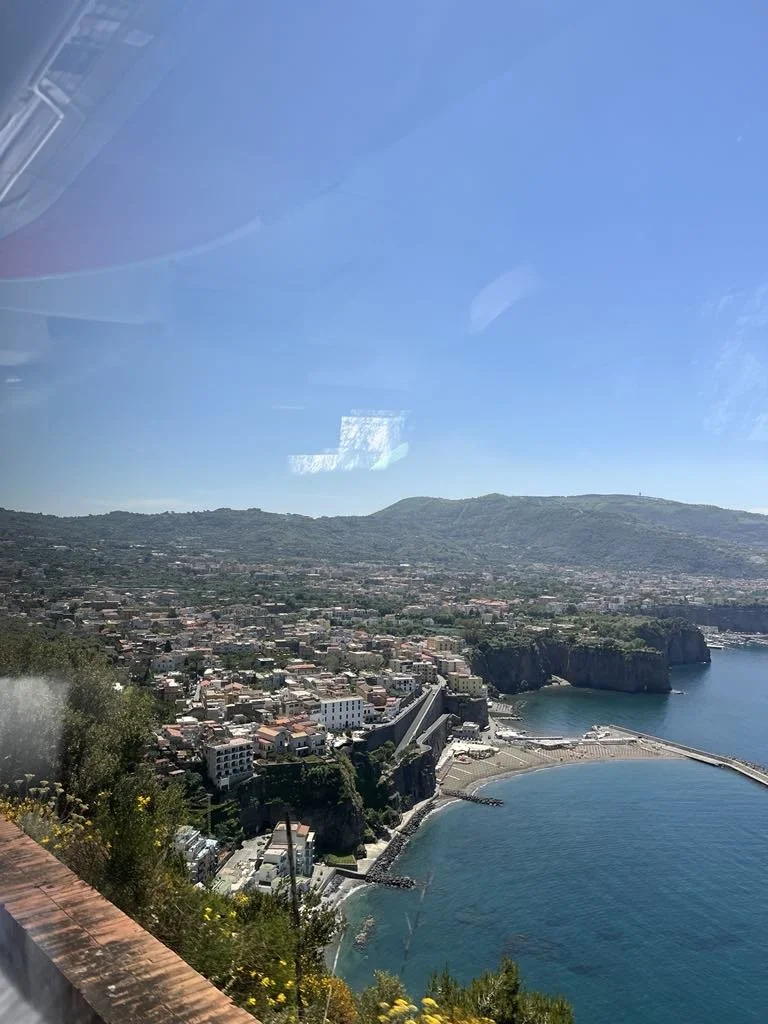
We made it back to the hotel just in time for breakfast, then checked out and headed for the bus station. We boarded a Flexibus to Sorrento, watching the landscape shift as we wound our way along the coast.
Once in Sorrento, we grabbed lunch before hailing a taxi to our accommodation—up a steep hill with barely a path in sight. The driver tacked on an extra fee just for loading our bags. It felt like a bit of a shake-down, but the alternative was a 20-minute uphill slog with luggage in the midday heat, so we let it slide.
After checking in and dropping our gear, we changed and headed straight back down into the heart of Sorrento. First impressions? It felt more like a resort town than a cultural one. To be honest, there seemed to be more Americans than locals.
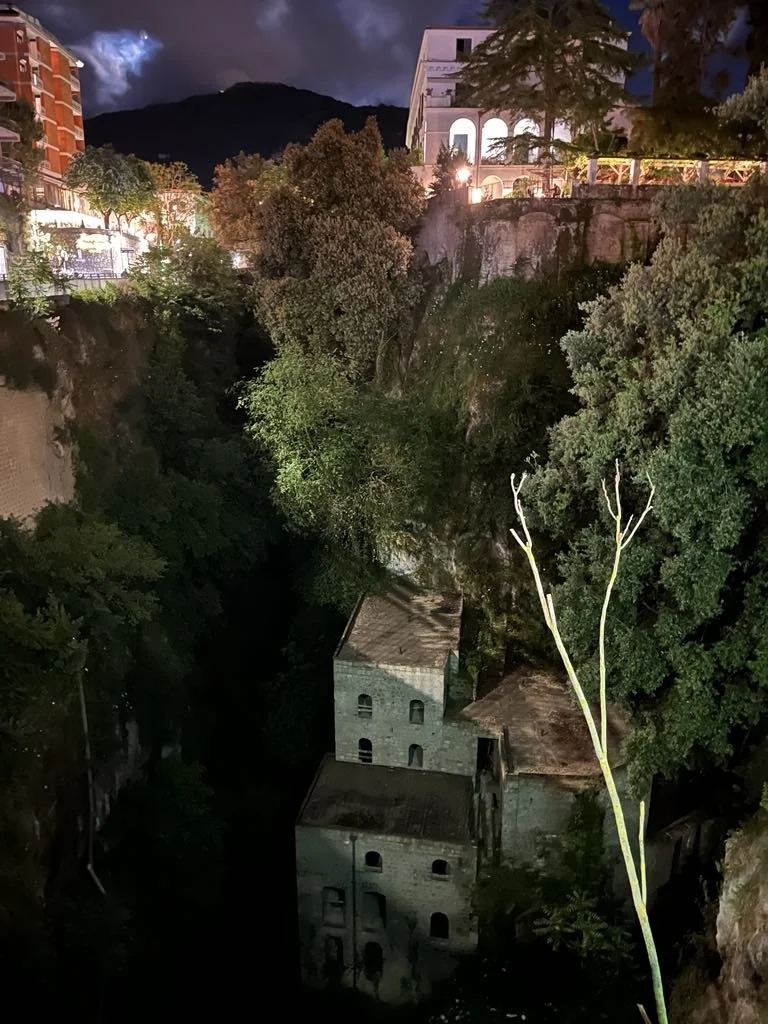
We wandered the streets to get our bearings, grabbed some drinks and dinner, and started the climb back up to the accommodation. That’s when we stumbled across one of the places I’d marked on my map: The Valley of the Mills. At night, it looked eerie—half fairy-tale, half forgotten ruin. It tugged at my curiosity in all the right ways. And as we continued walking, one question began to itch at the back of my mind:
How do you get in?
Field Note:
Tucked just off Sorrento’s bustling Piazza Tasso lies Il Vallone dei Mulini, or the Valley of the Mills—a dramatic, sunken gorge carved by volcanic activity some 35,000 years ago. Named after the old grain mills once powered by a natural stream, the valley was abandoned in the 1940s and has since been slowly reclaimed by nature. Thick with vines, moss, and crumbling stone, it now exists in a kind of green twilight, sustained by a unique microclimate that nurtures rare plant life. Though officially closed to the public, the valley can be viewed from above—offering a haunting glimpse into Sorrento’s hidden past and stirring more than a few questions about what secrets might still lie below.
Day 3: Sorrento
When you're on holiday, all you really want, more than a good meal or even a good find is a decent night’s sleep. But a small, yappy dog across the way had other plans. It barked through most of the early hours, stopping only when I gave up entirely and got up for breakfast.
We’d originally planned to head to Capri for the day, but a change in plans meant more time exploring Sorrento. No complaints from me there were still a few places in town I was itching to check out.
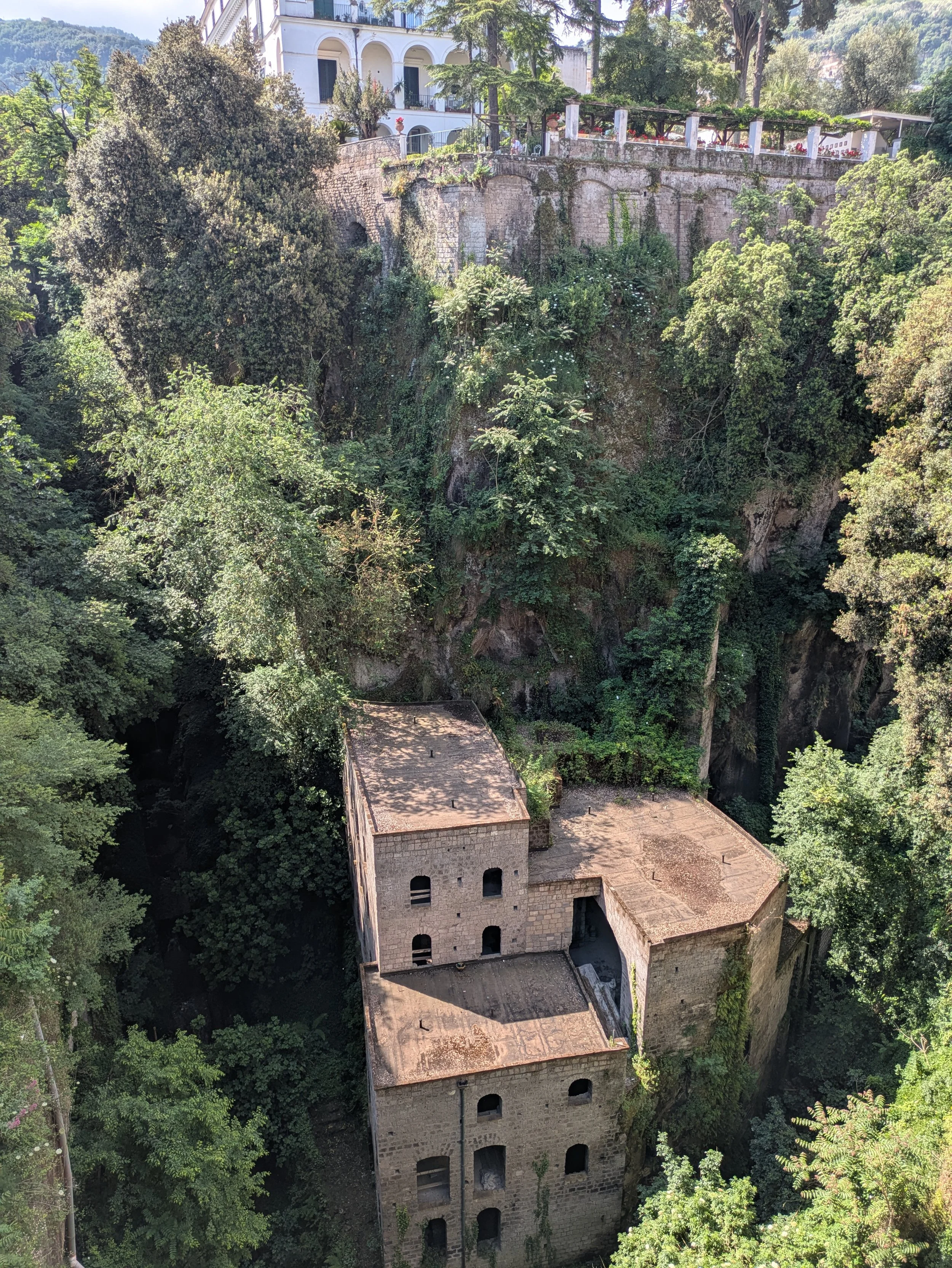
First on my list: the Valley of the Mills, again. I retraced our route from the night before, determined to see the valley in daylight and if I was lucky I’d figure out a way inside. I’d spent most of the sleepless night imagining what treasures might lie down there for someone with a sharp eye and a reckless spirit. I circled the viewpoint slowly, scanning for possibilities:
rappelling from the rusted bridge, base-jumping into the undergrowth, or perhaps slipping in through some old stairwell. I’d read that there were once steps from beneath the road, maybe even an entrance via the lower level of the parking garage. But from up here, it was clear that everything had long since been sealed up. I’ll have to keep thinking about this one.
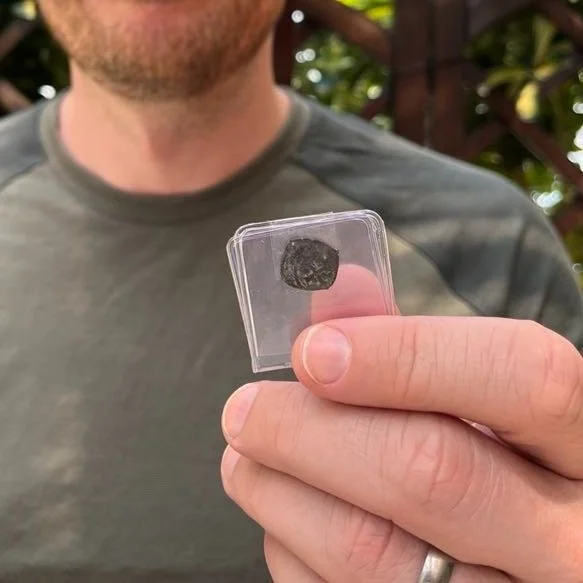
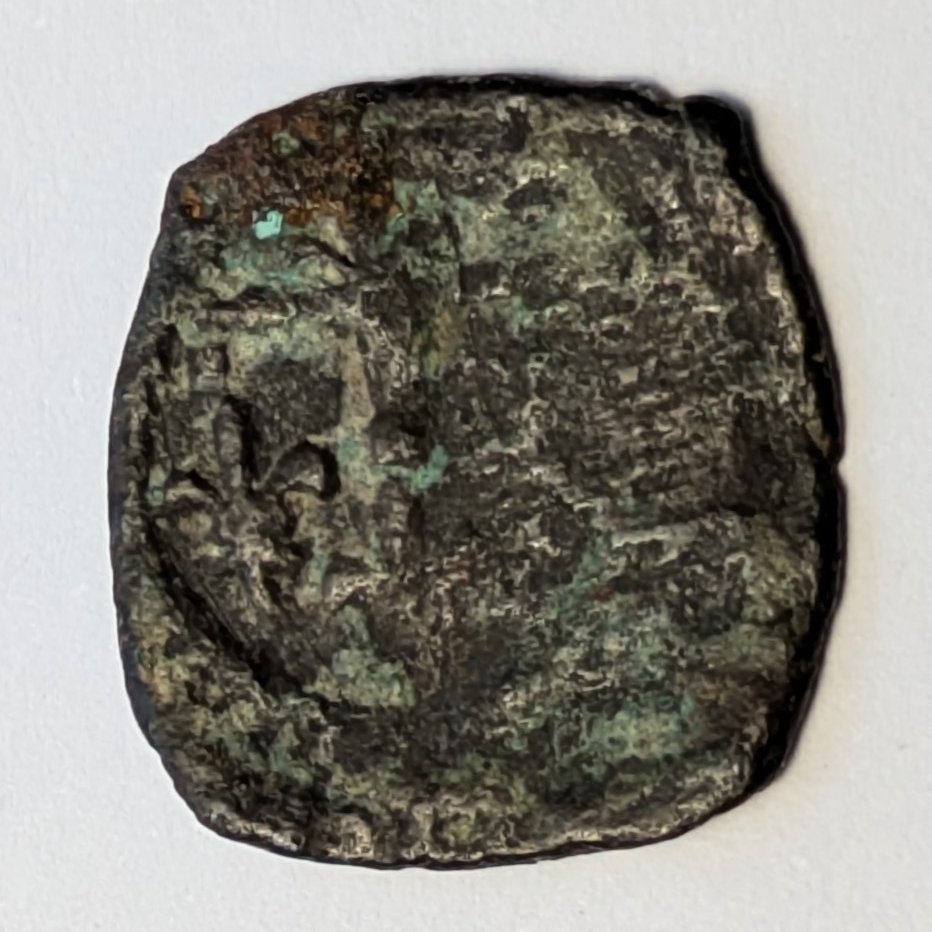
I’d also found an antiques shop online that looked promising, so we decided to swing by. Naturally, it was closed. Through the window, I spotted a display with a mix of modern coins, replicas, and what looked like a few genuine antiques. One square coin in particular caught my eye. I made a mental note to come back later.
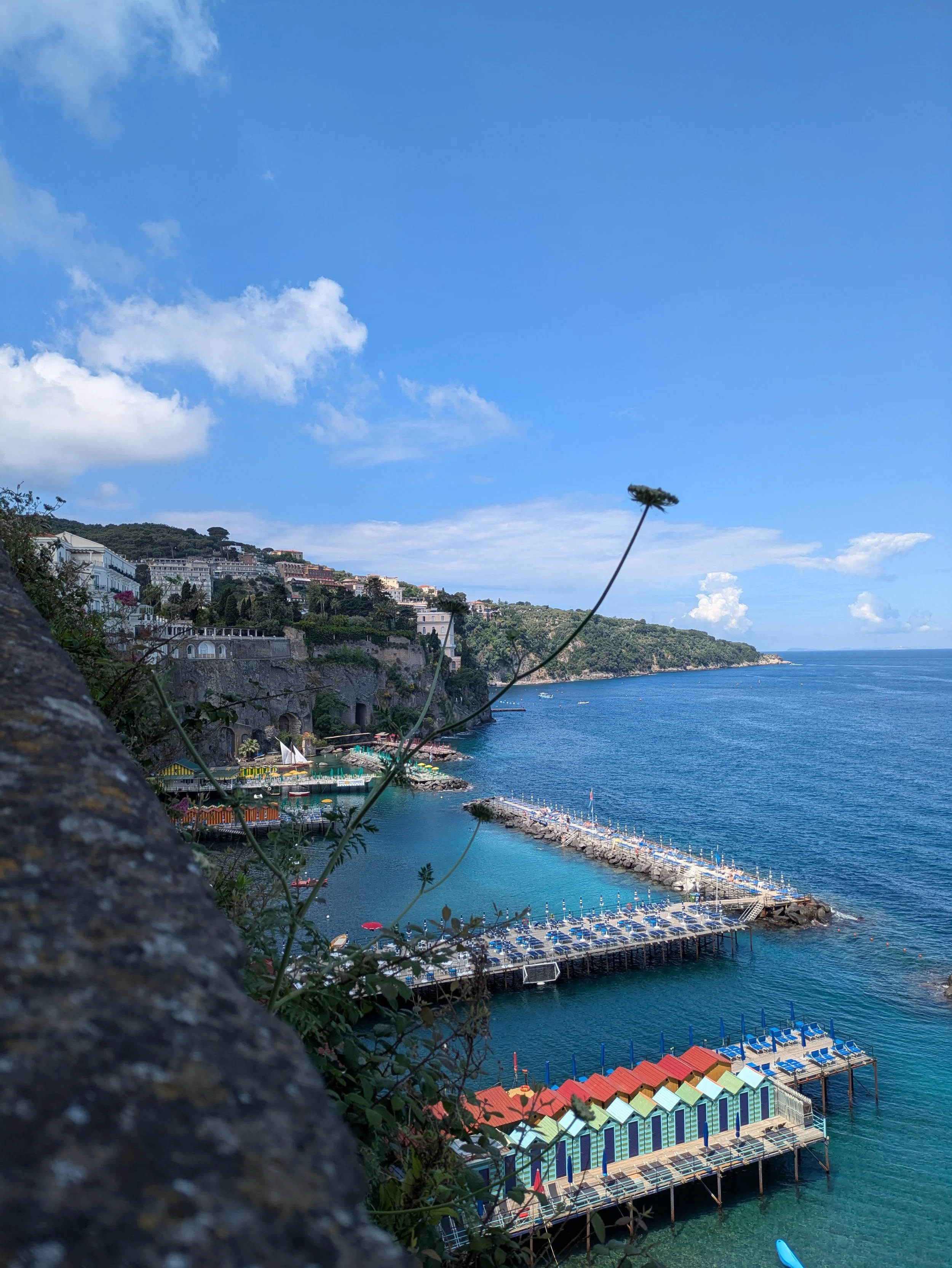
Down by the docks, we scouted ferry routes to Capri. There’s a lot of conflicting info online, so we wanted to check it out first-hand. We descended a winding cliffside staircase and passed through what seemed like a half-hidden underground tunnel before emerging near the waterfront. I’d hoped for a quick dip or a bit of beachcombing, but it turns out the beaches are private tiny little slivers of sand fenced off by hotels, with entrance fees that made no sense. I’ve never understood how a beach can be owned, especially when it’s the only access to the sea around. If I were a local, I’d be furious.
We grabbed coffee near the ticket offices - don’t. The prices here are absurd. I’ve never paid so much for such a tiny espresso. The ferry tickets weren’t much better: €48 one way to Capri. And it’s not exactly the Pacific crossing.
After lunch, we looped back to the antique shop. This time it was open. I browsed around, eyes locked on the window display. The square coin was still there, a tiny, worn piece with a cross stamped on it. It reminded me of a piece of eight, though I knew it wasn’t. Through broken English and a lot of hand gestures, I learned from the shopkeeper that four of the coins were genuine, and that this one might be Byzantine. I took the gamble and bought it for a great price.
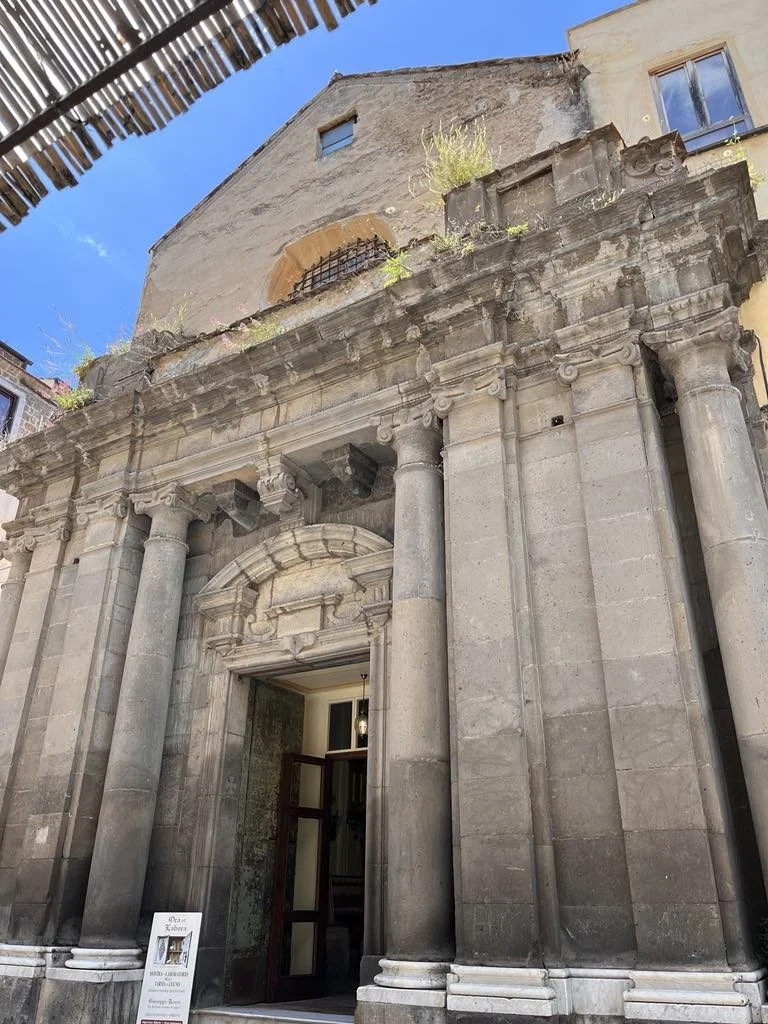
Across the street, we stopped for lunch, and I examined the coin more closely. The church next door had a similar cross design etched into its façade, could there be a connection? The coin had crosses on both sides, which struck me as unusual. A minting error, maybe? Either way, I was itching to do more research.
And then—disaster.
After lunch, I checked my pocket. Empty. The coin was gone.
I immediately retraced my steps, eyes scanning the ground, heart in my throat. I made it all the way back to the restaurant where, to my immense relief, I found the plastic packet lying on the ground right beneath where I’d been sitting. It must’ve slipped out when I pulled out cash to pay. That’s why I prefer zip pockets, but my shorts didn’t have any. Lesson learned. I stashed the coin somewhere safer this time.
Next, we made for the Queen’s Baths, but the bus stop near us was out of service due to construction. We hustled to the next stop and waited… and waited. When the bus finally came, the driver shrugged off our request for tickets. No explanation. Just waved us on—or off, we weren’t sure. Eventually, we caught another bus from a different route. Again, the driver didn’t give us a ticket but also didn’t ask for money. Maybe it’s free? Maybe it’s a trap? Italy keeps you guessing.
After a short ride up the winding hillside, we arrived near the top, with ocean views all around.

Fr
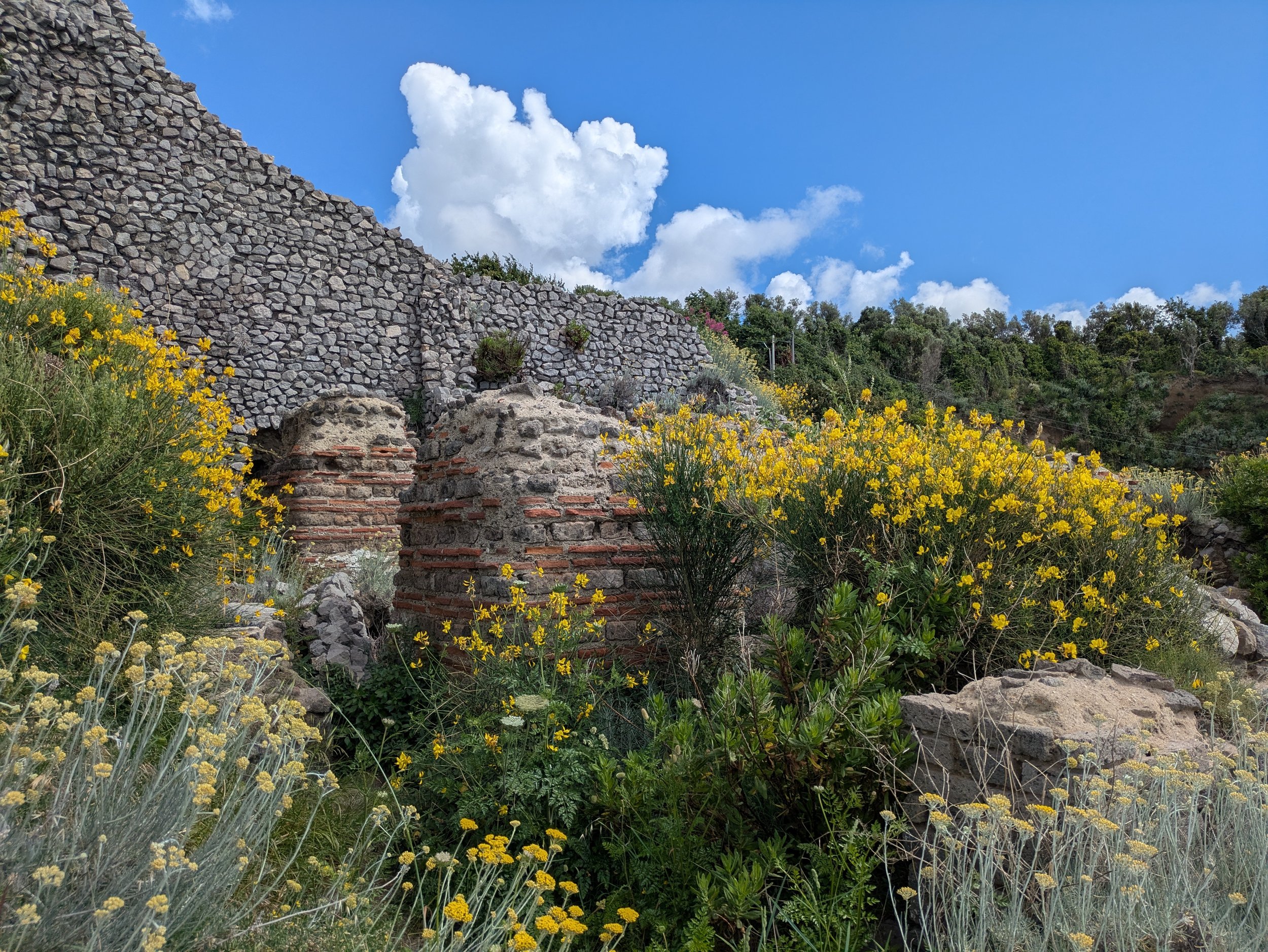
om there, it was a long, steep descent to the Queen’s Baths but it was worth every step. The site is beautiful: wild cliffs, azure sea, scattered ruins, and sadly, also a fair bit of trash. We explored the area and climbed down to the “bath” itself, where other tourists had already gathered. I slipped on a rock at one point, jolting my bad knee, and the thrill of diving in faded fast. I opted instead to rest on a flat rock and soak in the scenery.
Still, the place had promise. I made a note to return early one morning, when the crowds are gone and the tide might uncover something lost in time.
Field Note:Just outside Sorrento, perched on a rocky promontory overlooking the sea, lies Bagni della Regina Giovanna—the Queen’s Baths. Named after Queen Giovanna II of Naples, who allegedly used the secluded natural pool for secret romantic rendezvous in the 14th century, the site blends myth, nature, and archaeology in equal measure. The "baths" themselves are a stunning turquoise lagoon, shielded from the sea by a natural arch of rock, giving the illusion of a private cove carved by time. Above the pool, the ruins of an ancient Roman villa—Villa Pollio Felice—still cling to the cliffs, offering glimpses of mosaic floors and crumbling columns. The walk down is steep and rocky, but worth the trek, especially in the early morning when the crowds have yet to arrive. It’s a place where history and coastline collide—and if you look closely, the ruins and tide may just reveal more than they intend.GEAR REVIEW: Merino MISFIRE

FORCLAZ/SIMOND short-sleeved Merino Wool T-shirt
I’d read rave reviews about merino wool blend gear, promising comfort, temperature regulation, odour resistance, and quick drying. Supposedly perfect for adventure wear. I picked up a couple of baseball-style tees from Decathlon to put them to the test.
Verdict? Total disappointment.
They tore faster than a tourist map in a thunderstorm. One shirt got a hole after just one day of normal wear. At this rate, they’re just overpriced, fragile fabric that look at a backpack strap the wrong way and disintegrate. In hot weather, I’d say skip the hype and either go full synthetic or grab a cheap cotton tee you don’t mind getting wrecked. Merino still earns its stripes as a base layer but don’t count on it as your outer shell. Not unless you enjoy returning from a trip looking like you wrestled a bear.
Day 4: Capri
We were up early and moving fast, walking briskly down to the port to catch the ferry to Capri and after yesterday’s caffeine robbery, we weren’t about to risk buying coffee down there again.
The ferry ride was quick, overpriced, and rough on the stomach. We disembarked into a crush of high-end chaos, where the rich and entitled seemed to operate on their own set of rules—skipping lines, shoving past people, and moving like everyone else was invisible.
We ducked into a nearby café to regroup and plan the day. The lack of prices on the menu should’ve been the giveaway. As a seasoned connoisseur of tourist traps, my gut was already sounding the alarm. And sure enough, when the bill came, it was a masterpiece of daylight robbery with €10 for a basic coffee with milk. Nothing artisanal, just liquid regret in a porcelain cup.
We took the funicular to the top of the hill and made our way to the so called Gardens of Augustus, which cost €2.50 to enter. My advice? Skip it. It's a small path through plants you could see for free elsewhere, except here you also get a fence blocking the view. Honestly, it felt like we paid for the fence.
By now, I was getting a feel for Capri. It’s beautiful, yes, but it’s also a tourist honeypot where every step comes with a price tag, and charm often takes a backseat to profit.
While trying (unsuccessfully) to sneak a peek into a far more impressive garden reserved for hotel guests, we stumbled across something much more up my alley: the Capri Archaeological Museum. Jackpot.
Thanks to my CIfA membership, I got in for free (normally €10) and I’d have happily paid it. The collection was far better than expected, with genuine artefacts, strong context, and the kind of pieces that give you a solid sense of what to look for and where to find it when hunting in the field. Given the price of everything else on the island, this place felt like a bargain.
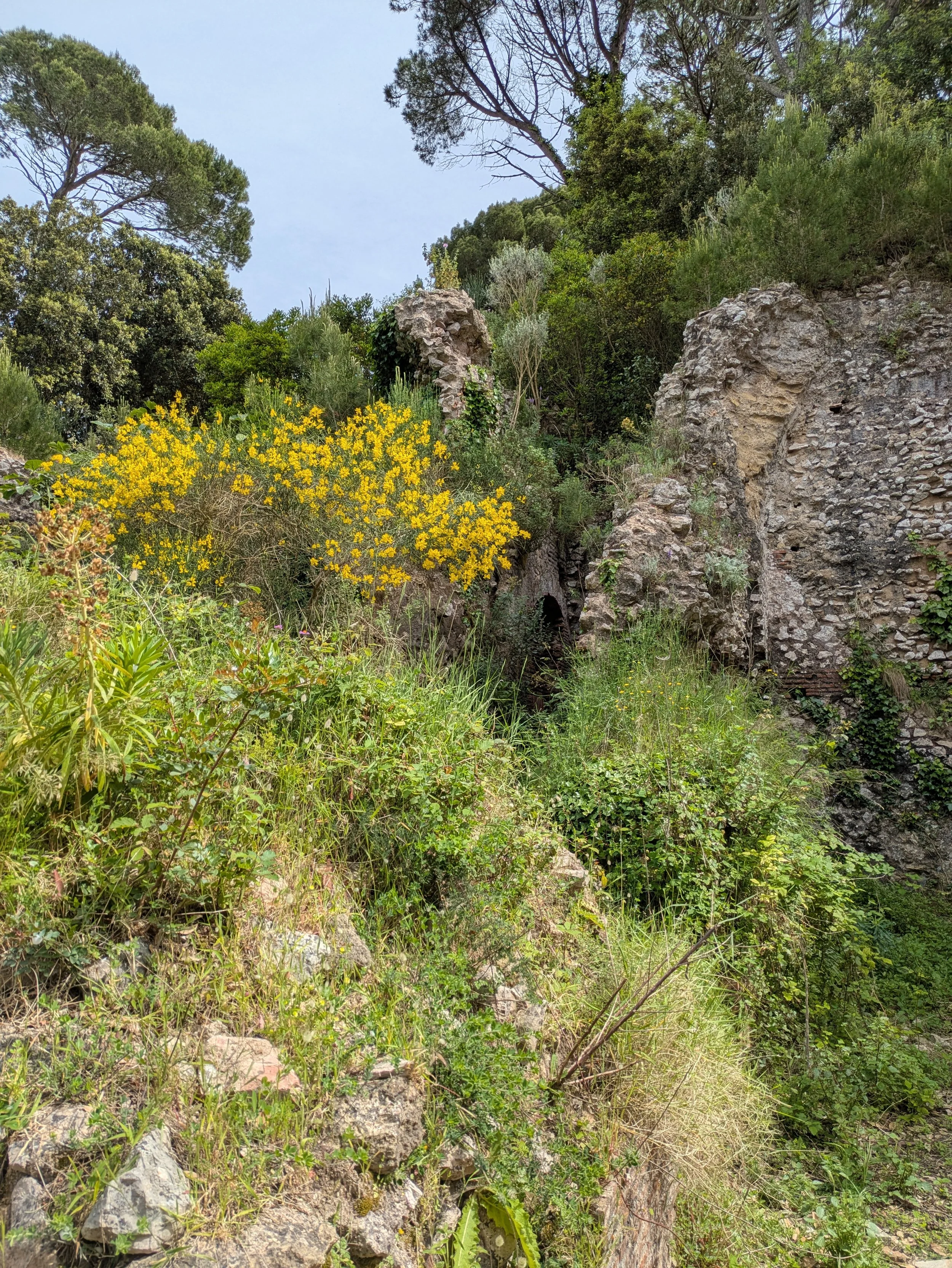
By this point, my knee was screaming, but we pushed on hobbling, limping, whatever it took. After a 40-50 minute climb to the top of Capri. That’s where we found it: Villa Jovis, the cliffside palace of Emperor Tiberius.
The history was rich here, but the site? Neglected. Trenches for plumbing had been haphazardly dug through ruins, with no signs of archaeological supervision. Piles of rubble, open pits… it took everything in me not to jump in and rescue what I could before it was lost for good. No signage, no pamphlets, no guidance. You pay around €6 to enter and are left to guess what you’re actually looking at.
That said, the view? Worth the climb. Worth the pain. You stand at the edge of history, staring out at the sea from cliffs that once served as a throne for a paranoid emperor. I could think of worse ways to go than being hurled off that cliff with that view as your final moment.
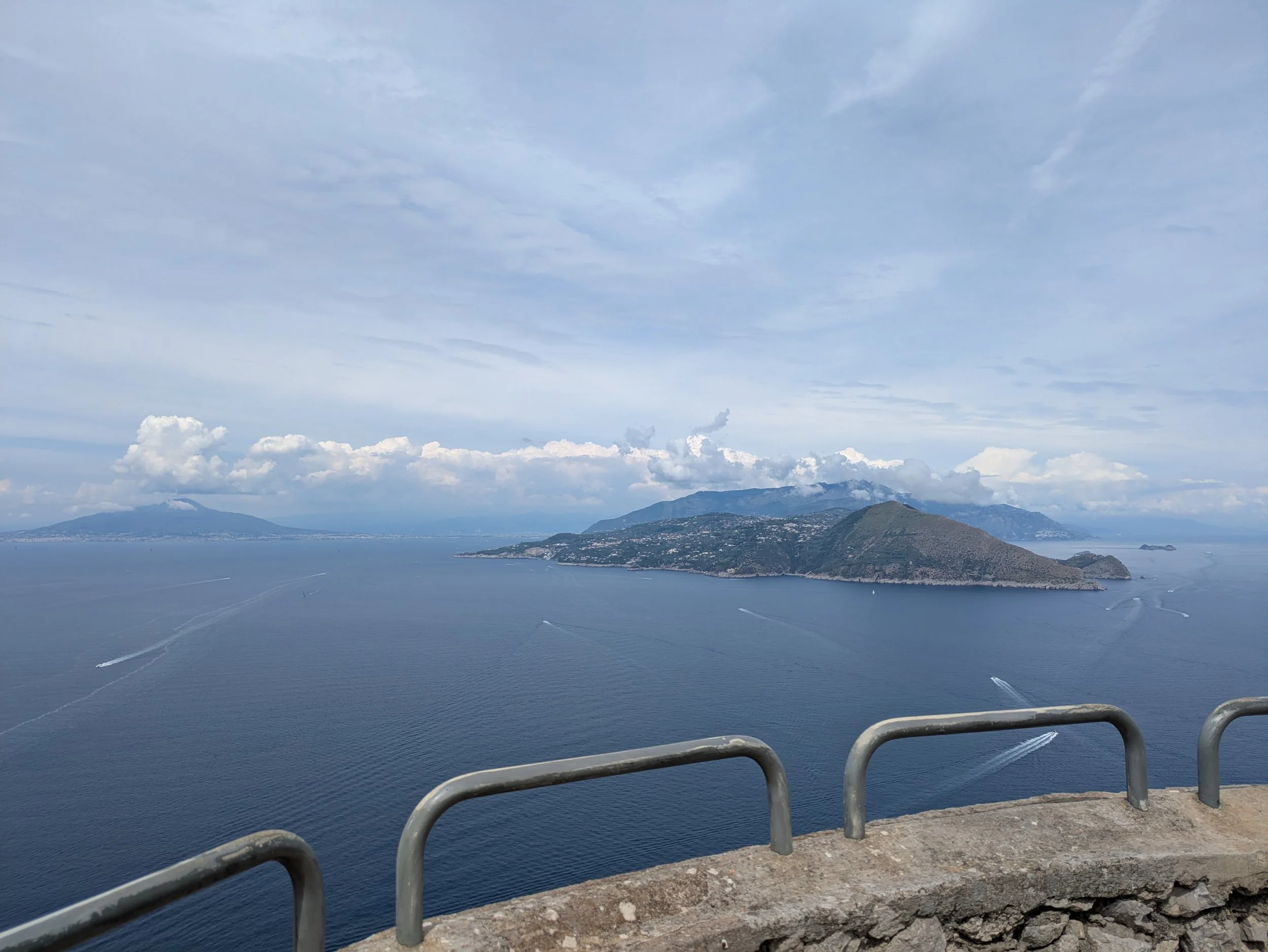
We made our way back down the long path to the funicular, enjoying the views and seeing how much history was literally in peoples gardens on Capri. What archaeological wonders were these people’s properties sitting on that might never be discovered?
After a day that burned through both euros and cartilage, we opted for a home-cooked pasta dinner and a humble €3 bottle of local wine. Honestly? It wasn’t bad. Not great either, but after Capri, it tasted like justice.
Field Note:High above the sea on the eastern cliffs of Capri stands Villa Jovis—one of the best-preserved Roman villas in the Mediterranean and once the imperial palace of Emperor Tiberius. Completed around 27 AD, it served as his retreat and seat of power during the later years of his reign. The location is as strategic as it is scenic: a fortress-like sprawl of stone built atop sheer cliffs, with lines of sight for miles. Tiberius, famously paranoid and reclusive, was said to throw traitors—and sometimes just unwanted guests—off the cliffs to their deaths. Suetonius, ever the gossip, also claimed debauchery and cruelty reigned within its walls. Today, though, little information is offered on-site, leaving visitors to wander the ruins and imagine the empire that once ruled from this rocky throne.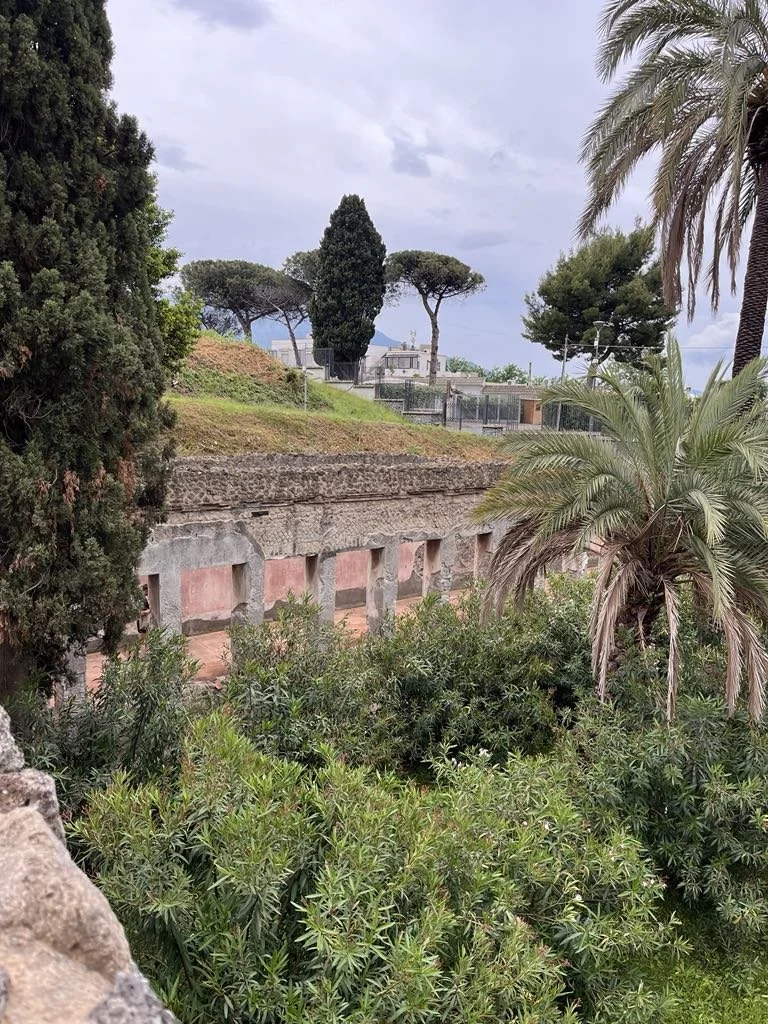
Day 5: Pompeii
Another early start. We were out the door in a rush—so fast, in fact, that I forgot my wallet, my cash, and my card. Looked like today was on my wife, no time to go back now. The plan was to catch the 8:14 a.m. train and beat the tourist crush at Pompeii. Tickets were just €2.80 each, and the journey took about an hour and a half.
When we arrived outside the gates of Pompeii, it was like stepping into a swarm. Tour guides waved laminated brochures like flags, scalpers pounced, and tourists scrambled for overpriced entry packages. We navigated the chaos and made our way to the official entrance, where unsurprisingly a massive queue had already formed. We joined the line, grabbed our audio guides, and stepped into the ancient city.
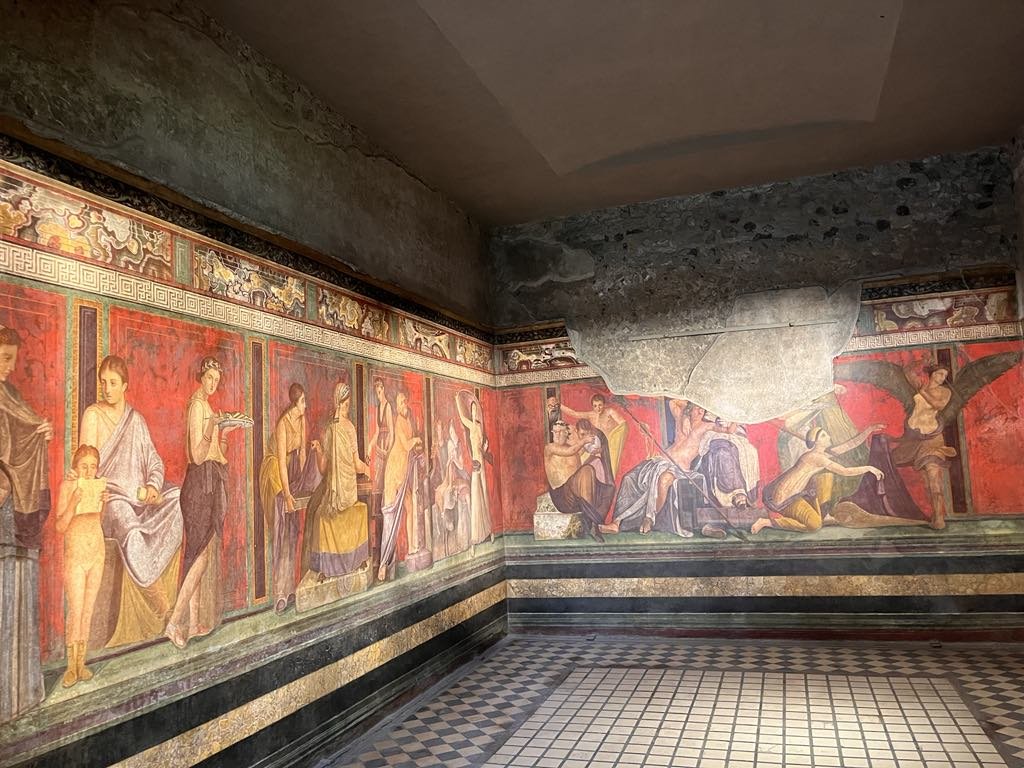
It felt a bit like entering Disneyland, if Disneyland had been buried by volcanic ash. And I couldn’t help but wonder; how many of these people actually knew what they were looking at? Pompeii wasn’t just “destroyed by a volcano.”
It was frozen in time in 79 AD, when Mount Vesuvius erupted with catastrophic force, burying the city in over 4 metres of volcanic ash and pumice. Thousands died—many of them suffocated or burned where they stood, preserved in haunting detail by the ash that covered them.
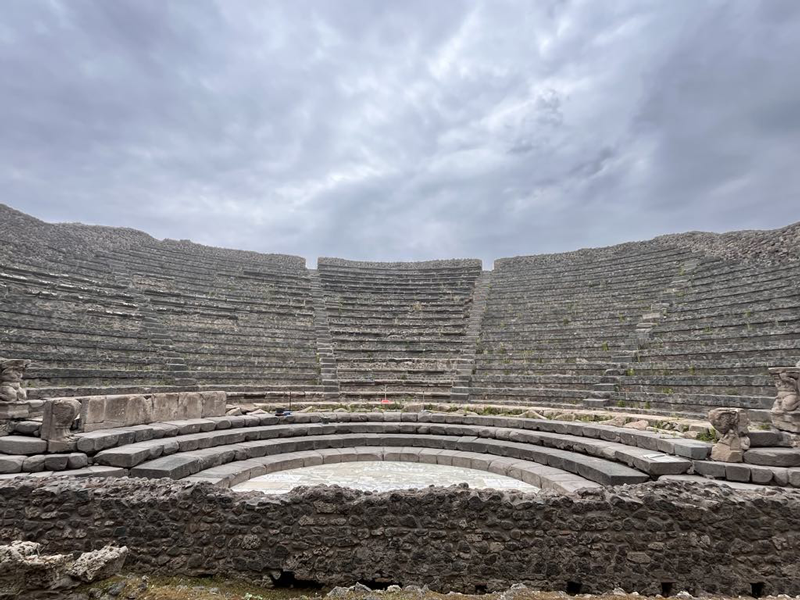
Today, Pompeii is one of the most famous archaeological sites in the world. But standing in the crowd, I found myself wondering how many visitors saw anything beyond the photo ops.
The amphitheatre, the forum, the grand villas, sure, everyone flocks to those. But what about the stories written into the stone? The details etched into the corners? Do they see it, or is it just another box ticked for the ‘Gram and their five-minute fame back at the office?
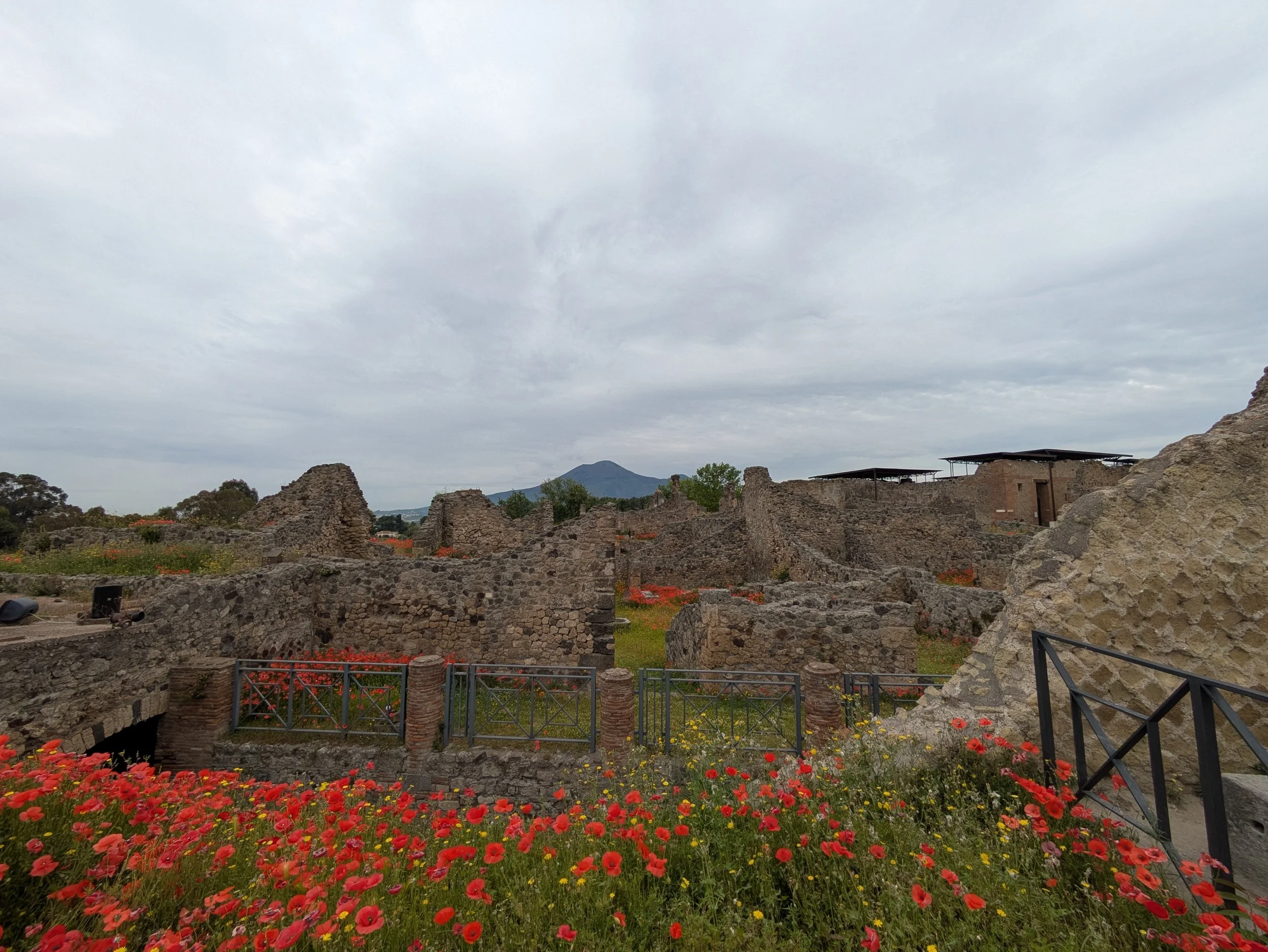
Over-tourism is becoming a real threat to places like this. It’s not just about wear and tear, it’s the cultural erosion. People carving their initials into walls that have stood for 2,000 years. The kind of ignorance that leaves you wondering why we let people in at all.
But I tried to push the cynicism aside and soak in the experience. My knee was still flaring up, but I hobbled on. We spent the entire day exploring, and I think we managed to see at least a glimpse of every major district.
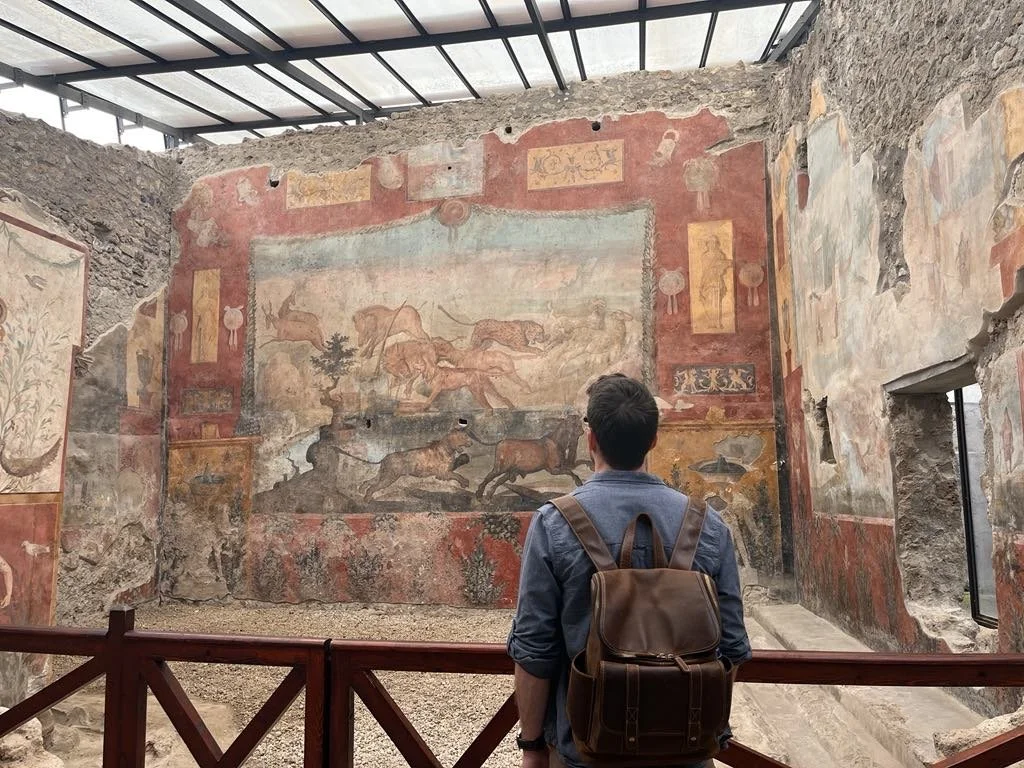
My favourite moment by far was the active excavation site, which had been thoughtfully enclosed with a covered catwalk overhead. From above, we watched archaeologists at work dusting, cataloguing, restoring.
It looked like a large communal courtyard, though there were no signs to confirm. It was real, living archaeology unfolding in front of us, and it reminded me what I love about this work. No photos were allowed, and sadly, that rule didn’t stop others but I respected it. Some things are better experienced in the moment anyway.
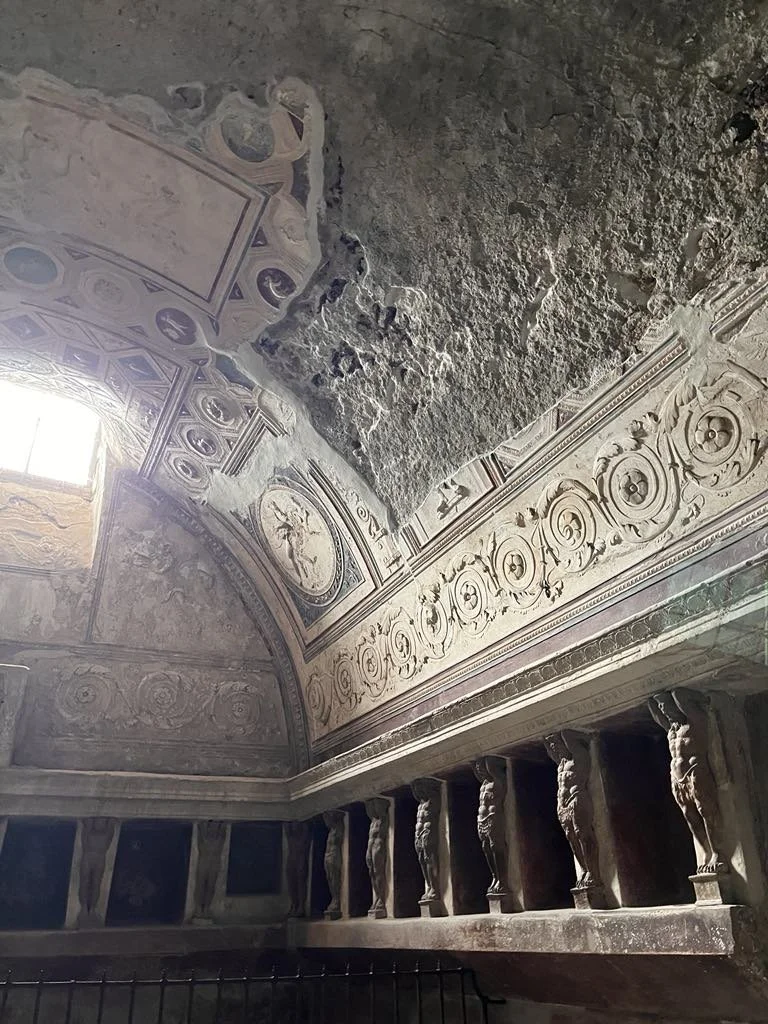
Pompeii is massive. I’d always known it was big but walking it is another thing entirely. As we stood on a hill overlooking the site, I realized we were actually standing on top of more buried structures. That hill, and others around it, some of which now have modern buildings which likely hide entire sections of the ancient city still waiting to be uncovered. Pompeii, as we know it, is only part of the story.
Before leaving, I’d hoped to pick up a souvenir, maybe a replica bronze figurine to sit among the real artefacts in my office. But the price? €30+ for something no bigger than my thumb. I was tempted anyway, but Ciara reminded me that it was hardly justifiable. And to be fair, she had a point. We lingered in the shop a while and noticed something curious: no one was actually buying anything. Maybe if the prices were more reasonable, they’d sell a lot more than just overpriced paperweights.
Field Note:Beneath layers of ash, Pompeii slept for nearly 1,700 years—preserved in eerie, haunting detail after the eruption of Mount Vesuvius in 79 AD. When it was rediscovered, it offered something no other site could: a frozen moment in time.Today, it’s easy to get lost in the crowds and photo ops—but beyond the stone streets and collapsed walls, Pompeii is a living dig, with over a third of the city still buried beneath modern hills and buildings. Every excavation uncovers not just ruins, but real lives—messages scrawled on walls, meals left on tables, people caught mid-step. It's a place that reminds us: history isn’t just behind us. Sometimes, it’s still being unearthed.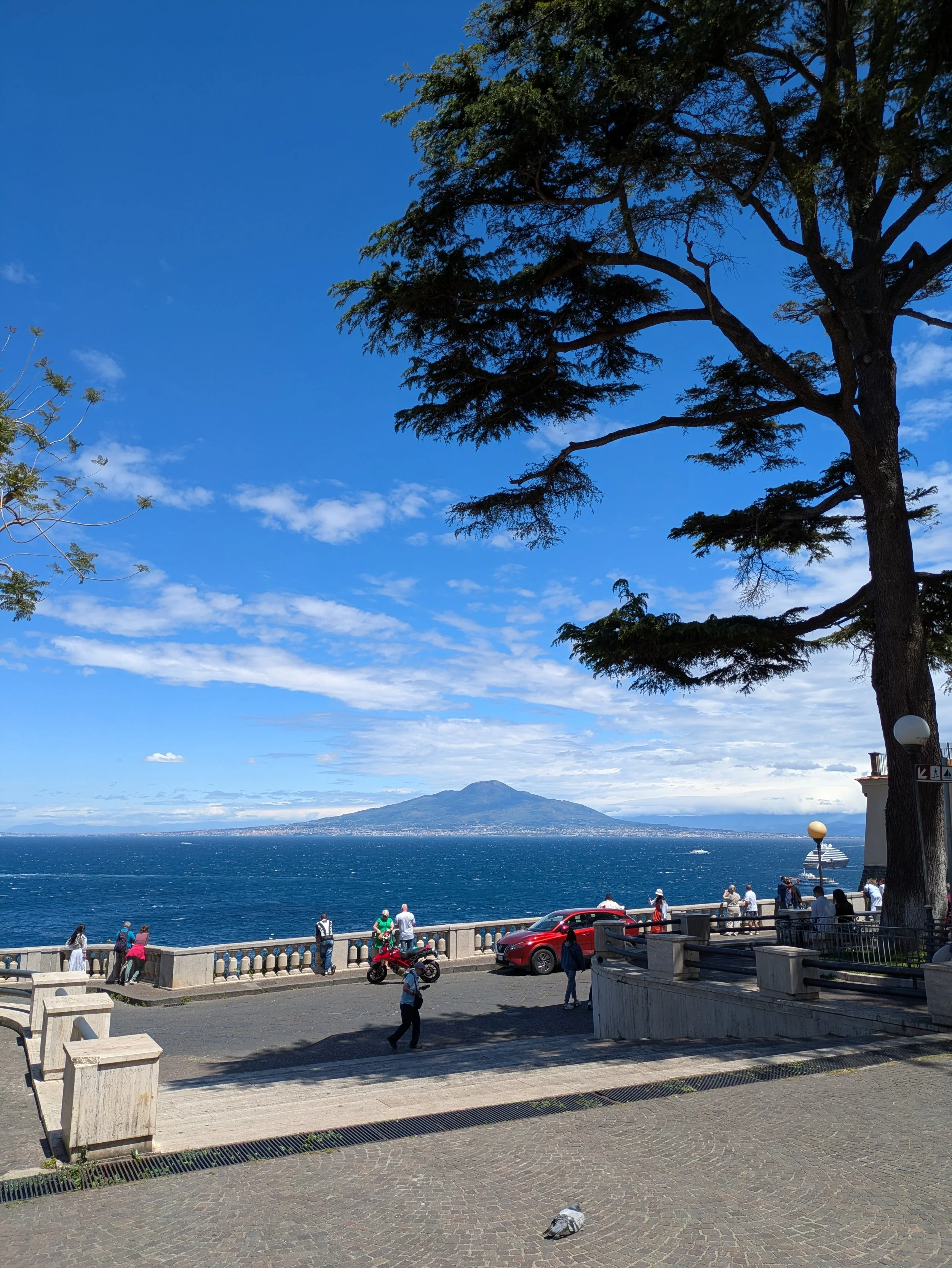
Day 6: Final Day in Sorrento
It was our last day in Sorrento, and I’d planned an early morning return to the Queen’s Baths. But the moment I stepped out of bed, my knee made its protest known; stiff, sore, and clearly not impressed with the miles I’d dragged it through these past few days.
If I had ignored it, hobbled solo down to that remote cove, and re-injured myself where there’s no signal and no easy way out, I’d be in real trouble. Sometimes you’ve got to trust your gut, even when your curiosity’s screaming louder than your common sense. So, I did the sensible thing: climbed back into bed, ice pack on my knee, and adjusted the pace.
After breakfast, we headed back into Sorrento to explore a few of the less-trodden streets we hadn’t yet wandered. We passed the Valley of the Mills again, and I paused just for a moment wondering if there really was a way down there. If there was, it would have to wait for another expedition. This time, I’d brought no rope.
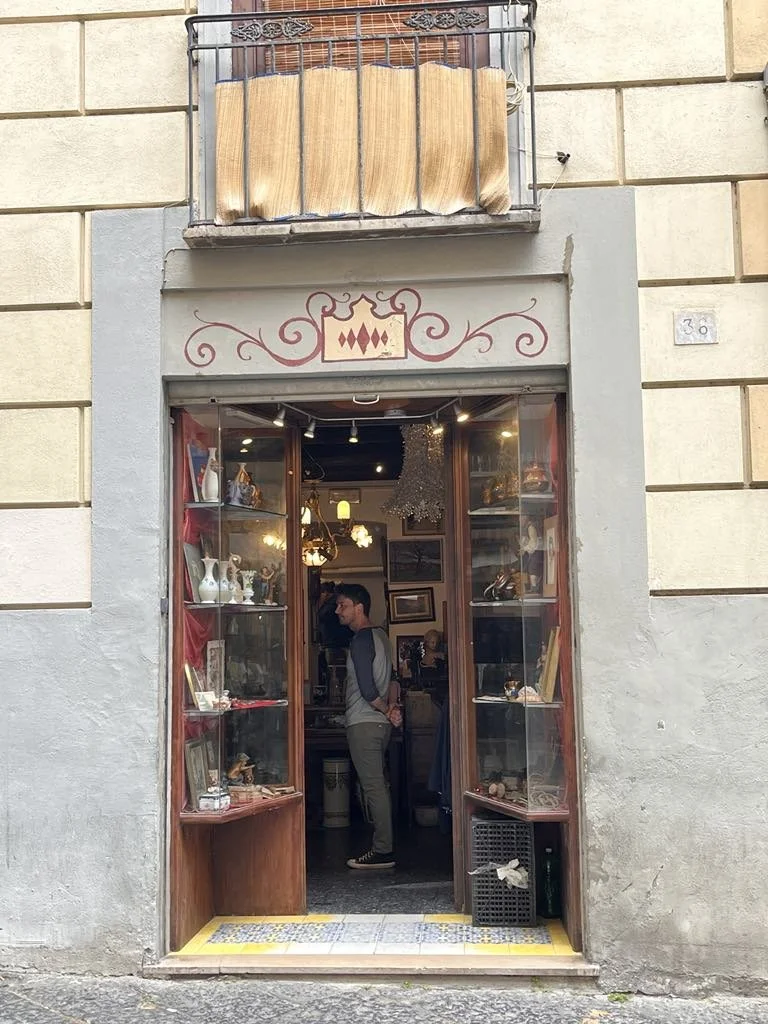
As we explored, we found more antique stores, but something about them didn’t sit right. These were flashier, more polished, and planted right on the main tourist trail. The kind of shops that feel like they know you’re not local and plan to make you pay for it. I wasn’t in the mood to play games or haggle with a smirk, so I gave them a pass.
Instead, I returned to the original antique store, the one where I’d picked up the “Byzantine”-style coin. This time, I was greeted by a different man, who I suspect was the owner. He didn’t speak much English, and sadly, my Italian was worse than his English but somehow, we made it work. He kindly explained a few more items in the shop, and I ended up making another small purchase.

The place had charm. What it lacked in size, it made up for in character and quiet hospitality, a little refuge from the rush of Sorrento outside. Through the window, I caught Ciara’s expression from across the street with a look that said I’d been in the shop long enough. Message received. I wrapped things up, thanked the owner, and stepped back out into the sun.
Our last day in Sorrento was slower, more deliberate. No ruins, no bus rides, no scrambling over rocks or racing the clock. Just time to wander, reflect, and say goodbye to the place with a little more clarity than when we arrived.
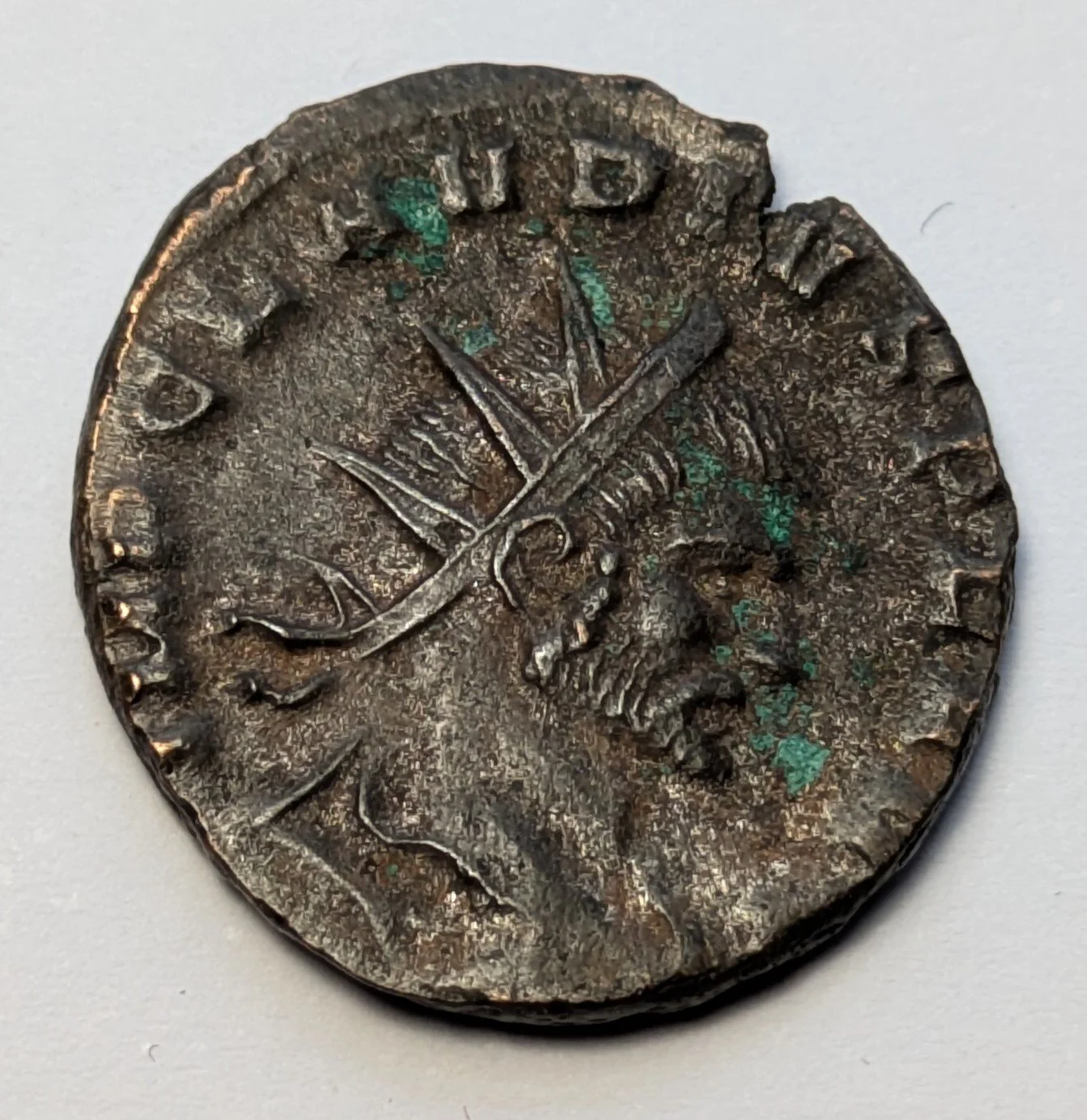
Artefact IDENTIFICATION:
When I got home I did some research into the few items I’d picked up on the trip and feel fairly confident in the following identifications.



Day 7: Sorrento to Naples
The next morning, we dragged our suitcases down the steep hill, bumping over the cobbled streets from the accommodation back toward the train station. For some reason, there was a heavy police presence, not unusual in Naples, but still enough to make you wonder what had kicked off.
We boarded the train from Sorrento to Naples, which felt like it took forever. That might’ve had something to do with my seat wedged into a luggage alcove with no window, no legroom, and surrounded by bags. My only entertainment? A cup of absurdly strong coffee I’d picked up at the station, which kept me wired enough to ignore the awkward seating.
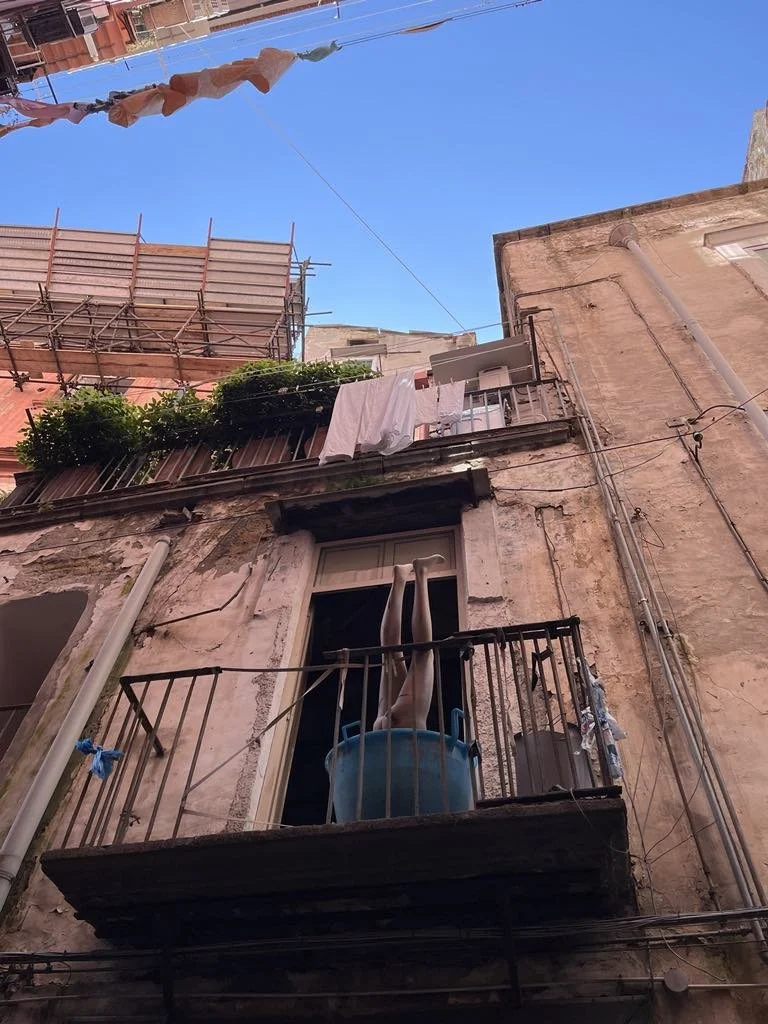
Once we arrived in Naples, we stepped straight into chaos. The streets were hot, noisy, wild, Naples in full force. I’d forgotten just how intense this city can be. Dodging mopeds and dragging suitcases through the madness, we eventually found our hotel, tucked away behind a giant, weathered door. Inside was a surprisingly elegant marble staircase, and one of those tiny old-school elevators with the gate you have to pull shut before it’ll move. Classic.
The room was nice, but the bedside table came with a warning: a complimentary set of earplugs. Never a good sign.
In the afternoon, we headed back to explore the underground city tour we’d pinned during our first visit. The one we originally spotted turned out to be self-guided—normally my preference, but this one seemed a bit sparse on content. Instead, we went with a nearby guided tour for €15 per person. A bargain, really. That’s about 1.5 coffees in Capri.

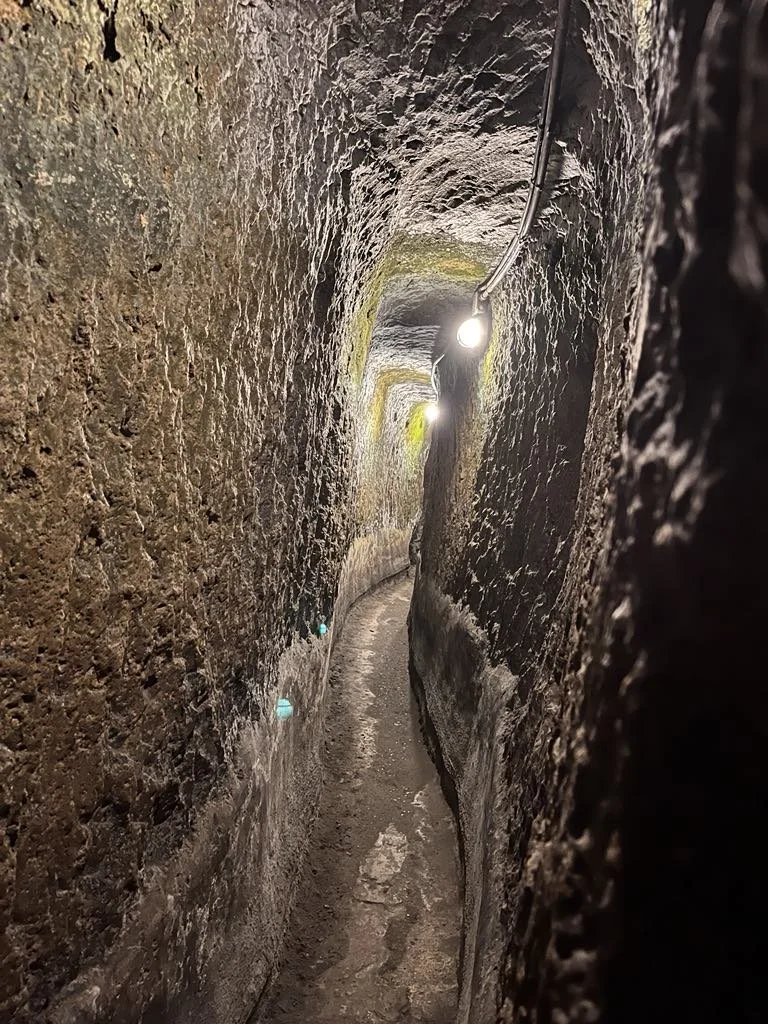
The tunnels were incredible. We learned they’d been used as air raid shelters during WWII, with all entrances sealed except one; the one hidden beneath a church. The logic was simple: who would bomb a church? Apparently, someone did.
As we ventured deeper, the guide explained that the tunnels had been reused over the centuries. The Romans used them, but they weren’t the original builders. That honour goes to the Greeks, who first carved these tunnels out of volcanic rock over 2,500 years ago.
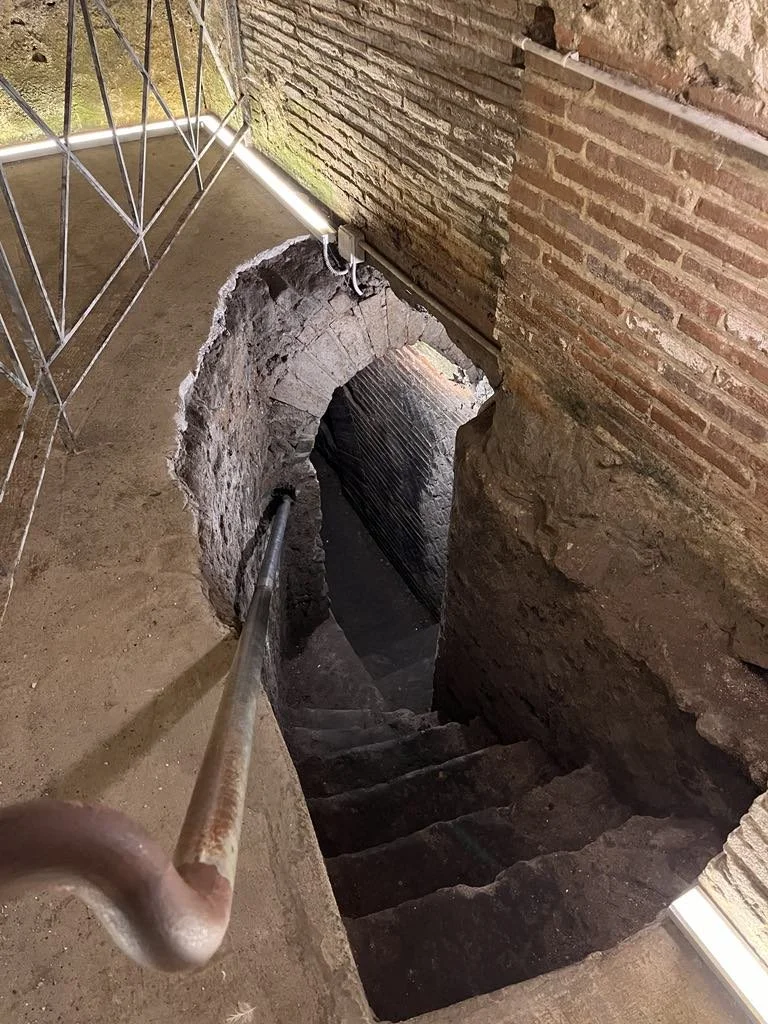
After resurfacing, we were taken down a nearby street to an unassuming building where the guide told one of those stories that sticks with you: archaeologists searching for the lost amphitheatre of Naples had once knocked on an old woman’s door. Inside, they noticed Roman brickwork hidden in plain sight.
They bought the property and began digging. Turns out, the woman had a hidden wine cellar beneath her bed, accessed through a secret hatch. That wine cellar? Part of the lost Roman amphitheatre. The arches, still intact. Absolutely wild. Makes you wonder how much more of ancient Naples is buried right underfoot, hidden beneath kitchens, bedrooms, and wine racks.
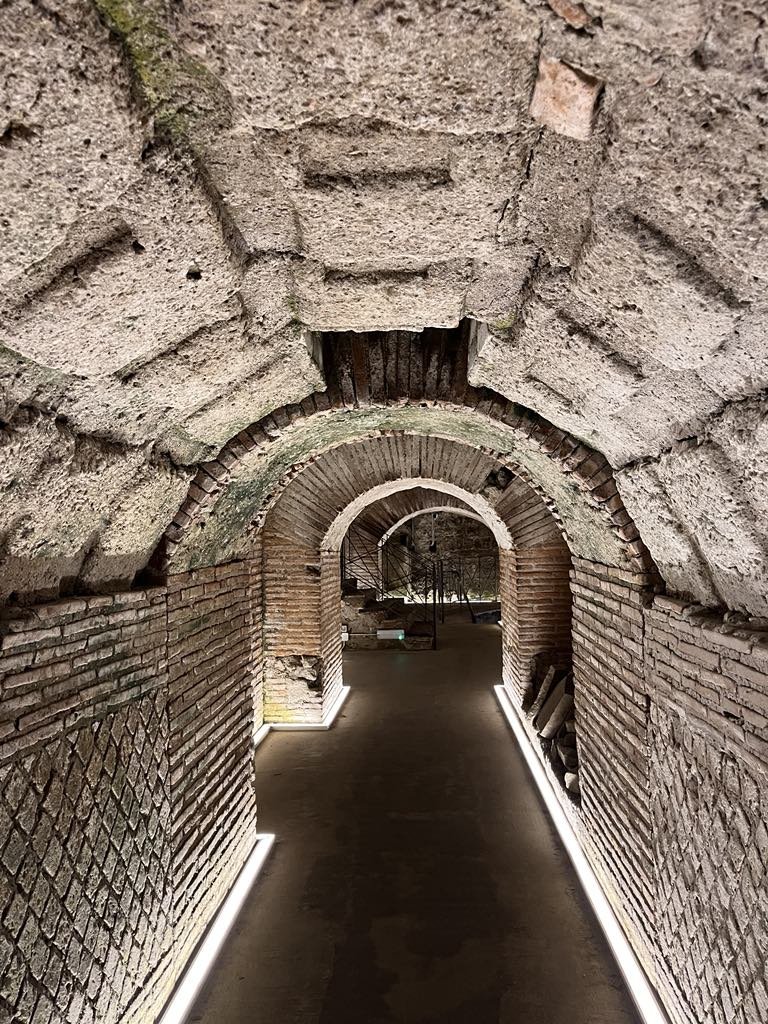
Urban legends speak of undiscovered catacombs, sealed vaults, and wartime caches lost beneath collapsed entrances and modern construction. Some researchers believe entire quarters of ancient Neapolis may still be hidden, walled off and inaccessible; by both stone and bureaucracy.
Occasionally, new sections are found during roadwork or renovations. A wall gives way, a floor collapses, and history spills out. But for every chamber uncovered, dozens more remain sealed behind layers of time and neglect.
For dinner, we headed toward the university district, where the vibe was more local and the prices were sane. After a satisfying meal, we began the walk back to the hotel and were immediately reminded just how unapologetically chaotic Naples is.
**Fireworks, car horns, shouting, laughter, sirens, yelling—**it all blends together into a wild, relentless soundtrack. And it doesn’t stop. Not even at night. Not even close.
Field Note:Most visitors only scratch the surface of Naples—literally. Beneath the city lies over 450 kilometres of tunnels, cisterns, and chambers—an ever-expanding labyrinth shaped by Greek quarries, Roman aqueducts, and centuries of repurposing. But here's the kicker: most of it hasn't been mapped.If there’s a city where a pickaxe might still strike something no one’s seen in 2,000 years—it’s this one.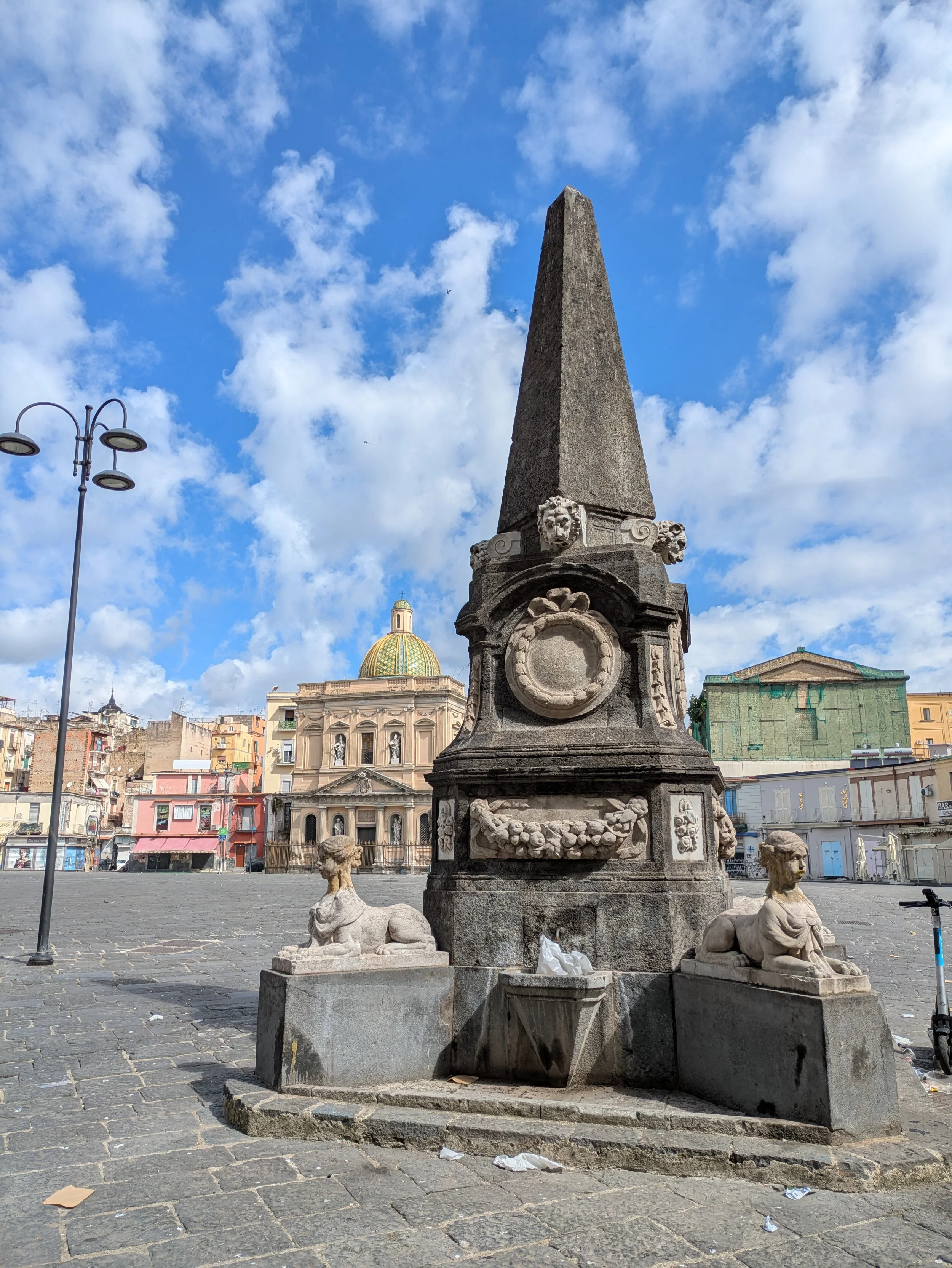
Day 8: Naples and the Journey Home
After a night of honking horns, fireworks, and sirens, we concluded that aside from all that the hotel was actually great. They even brought a full spread of breakfast straight to our room.
We headed back into Naples' old town, taking a different route to check out the market square. It was a bit of a walk and, when we got there, completely deserted. Still, I noticed something curious—a set of fountains flanked by gryphons, seemingly framing the church at the far end. It made me wonder what significance this layout held. A square, fountains, and mythical guardians surrounding a place of worship—interesting. If we’d had more time, I’d have dug into it properly.
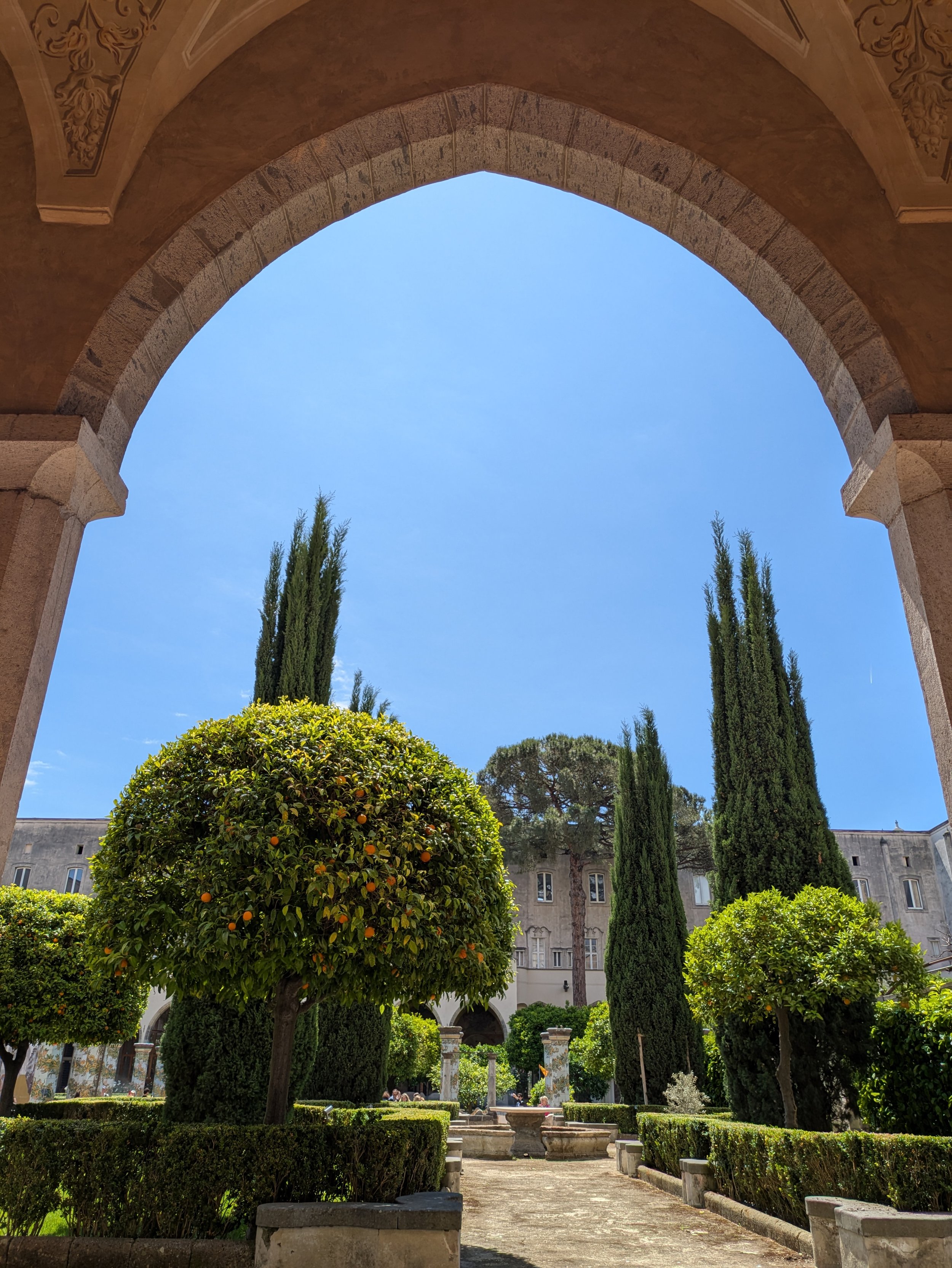
Next, we visited the San Chiara Monastery, an enormous and beautiful complex with an archaeological dig site right in its cloister. Earlier that morning, I’d found a €20 note on the street, which conveniently covered both our entries. Sometimes luck still works the old-fashioned way.
Then it was on to the National Archaeological Museum of Naples, where I had less luck. They weren’t interested in my CIfA card, so we paid the full €20 entry. Sadly, around a third of the exhibits were closed, including the one I was most interested in—the coin collection. I’d hoped to compare some of my finds from Sorrento with verified examples, but no luck there.
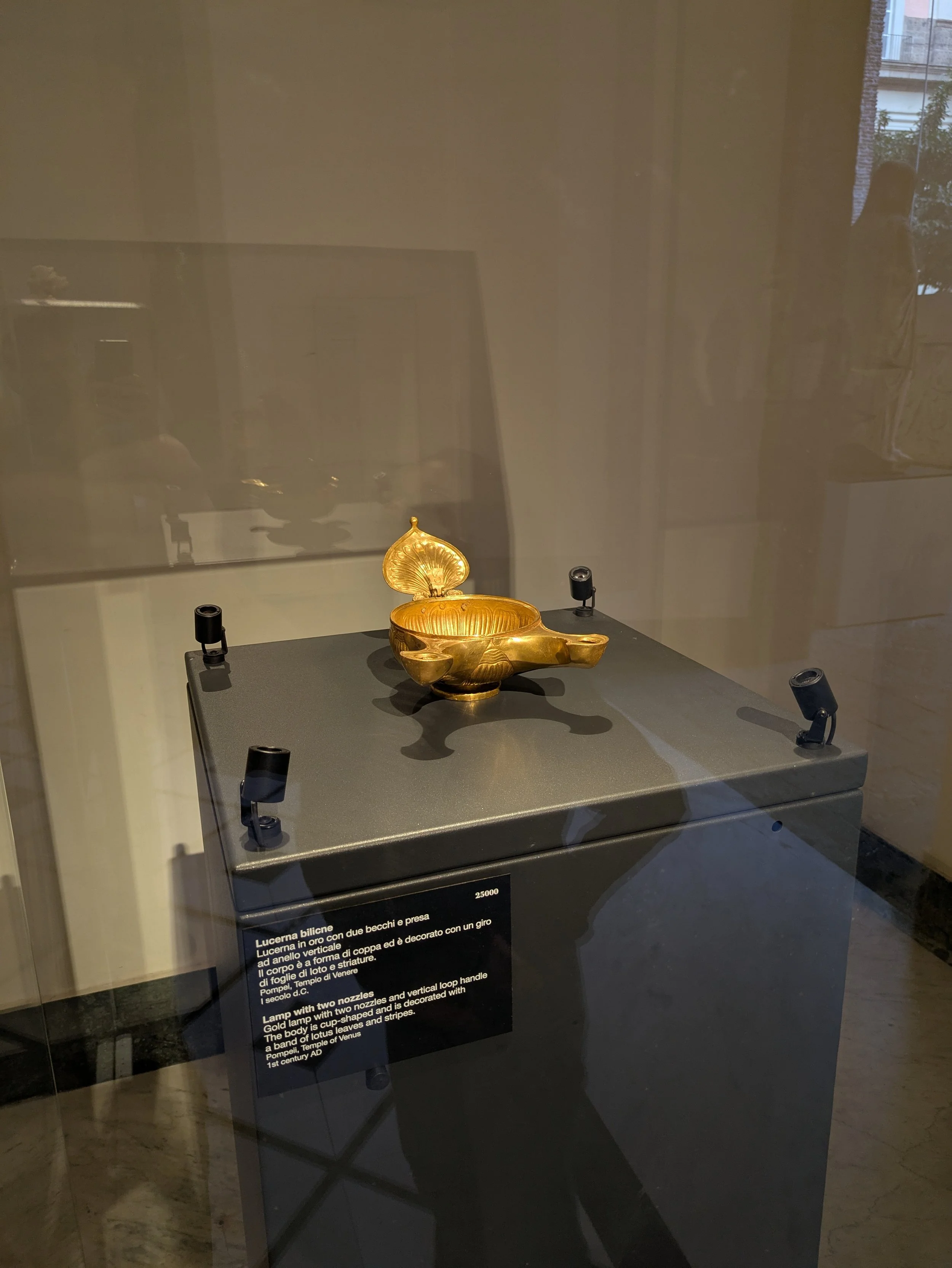
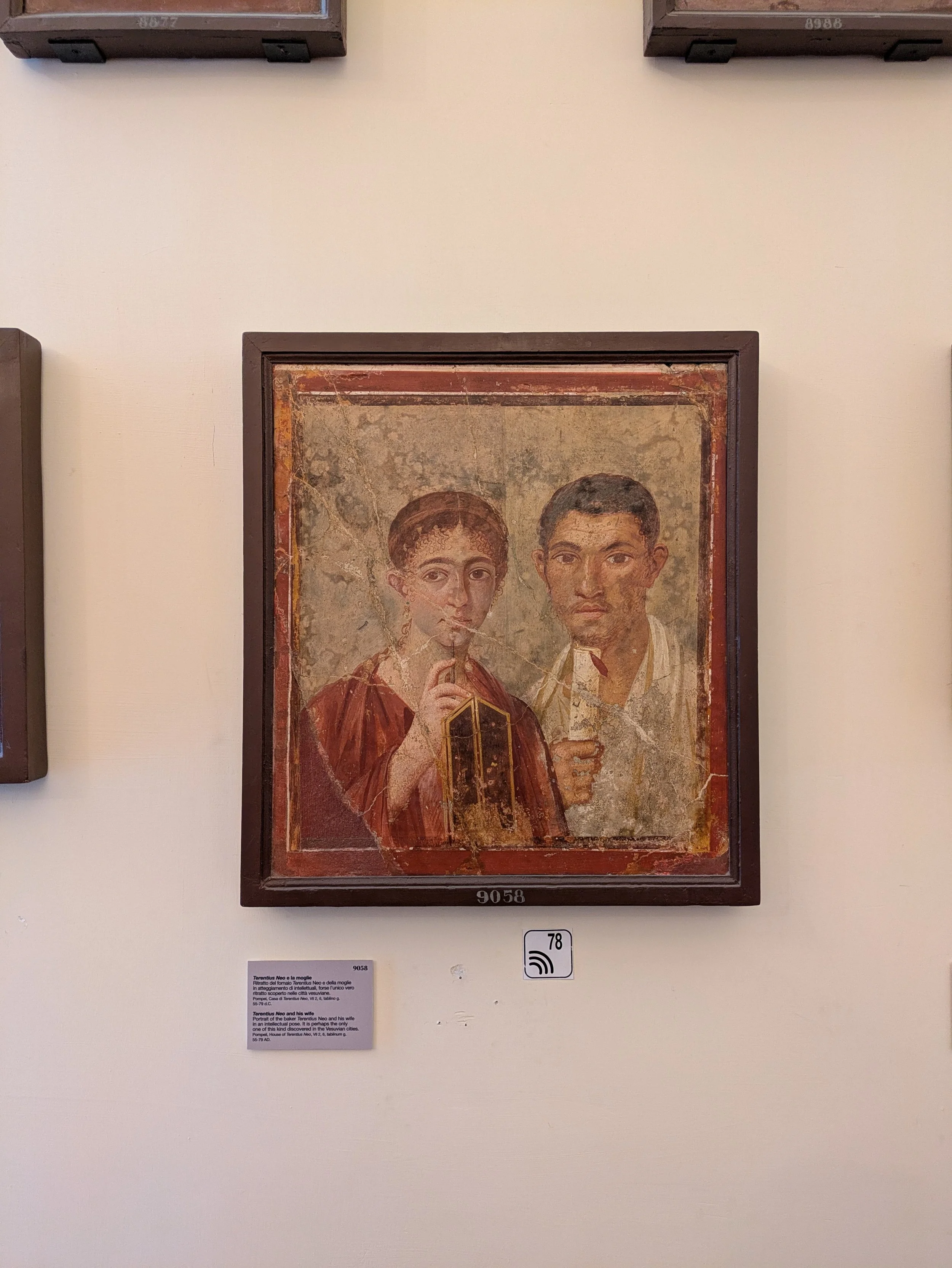
Still, the artefacts from Pompeii were phenomenal. Paintings, mosaics, statues, jewellery, tools; the preservation was stunning. But what really stuck with me was how disconnected it all felt. These objects had been removed from their original homes. Pompeii still holds the walls, the rooms, the floors—but the contents are here, in Naples.
I couldn’t help but imagine what it would be like if we reconstructed those spaces, placed the replicas or originals back where they belonged. Seeing the artefacts in situ would bring it all to life, instead of fragmenting the story across two cities. Unless you’ve been to both, you’re missing the whole picture.
Before leaving, I swung by the gift shop, hoping for a more affordable version of the bronze figurine I’d seen in Pompeii. They did have the little bronze frog, and it was €10 cheaper—but still overpriced. The shop was also selling gold figures for thousands of Euros, which made me question who exactly was buying these things. I left the gold behind but picked up two posters of Pompeii artwork—a more practical souvenir that I can actually display.
Then it was time to grab our suitcases and head to the airport.
And I wish I could say that’s where the adventure ended…
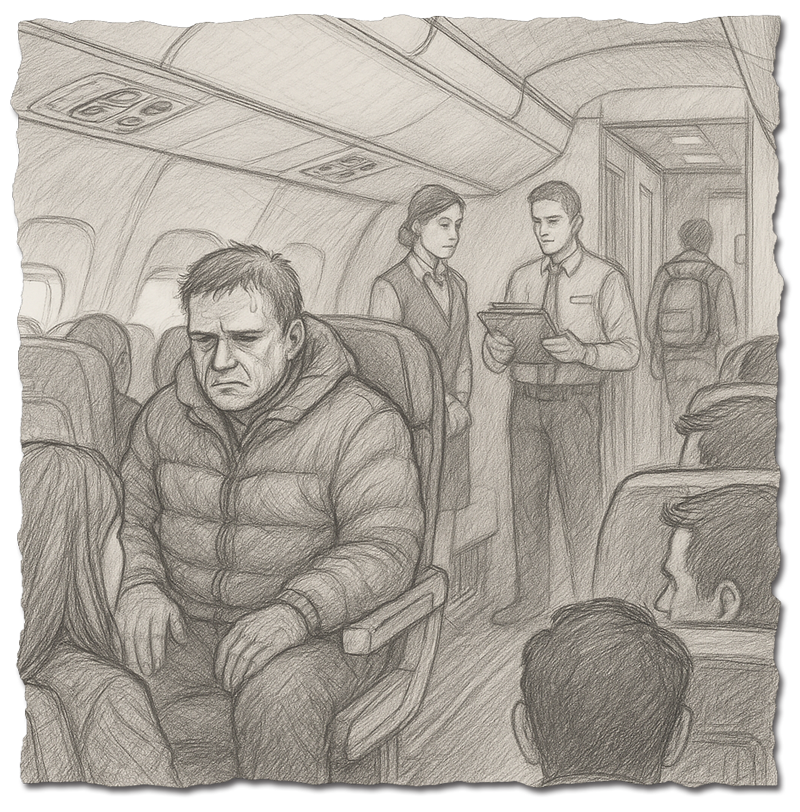
When we boarded, I spotted a man who instantly set off alarm bells sitting two rows ahead on the opposite side of the aisle. He was sweating through a thick, puffy jacket in 24°C+ heat and refused to take it off. The seat beside him was empty; his original seatmate had already moved, likely spooked by the guy’s constant shifting, phone-fiddling, and obsessive blasting of the air vents.
The cabin crew noticed too. They told him to stay seated, but he kept getting up, pacing, fidgeting. Eventually, they pulled out the passenger manifest, clearly trying to figure out who he was. The moment their backs were turned, he grabbed his backpack and disappeared into the front toilet.
Everyone was watching.
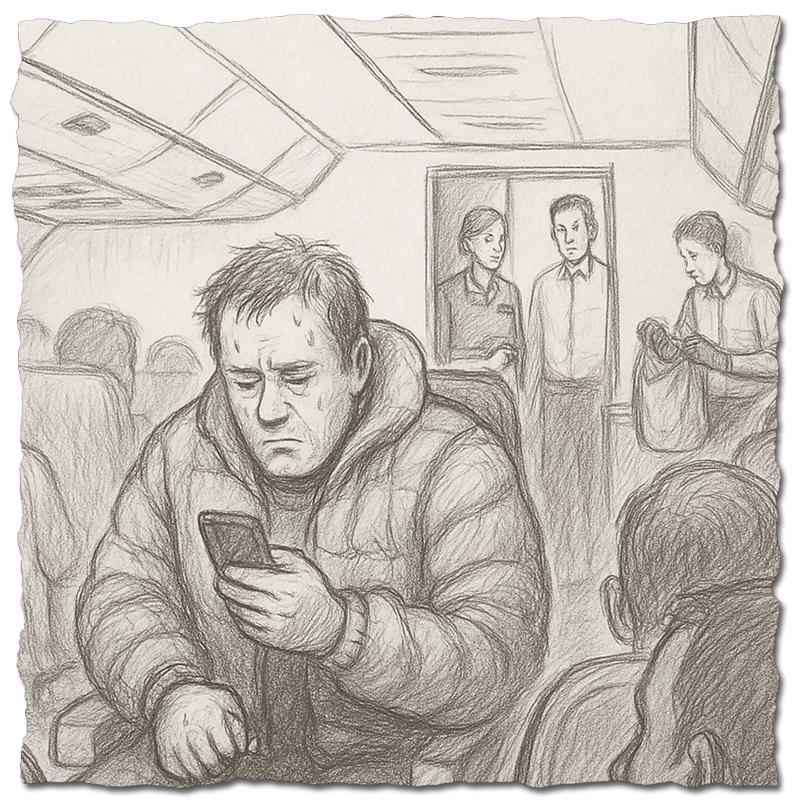
Someone near him alerted the staff that he’d taken the bag into the toilet. When he came out, he looked more relaxed... but that didn’t help my nerves. He started trying to make a call mid-flight, and my mind split in two: drugs, or something worse.
I gripped the seat, Ciara’s hand, and every ounce of self-control. I was mentally rehearsing how to unlatch my belt and lunge, if I had to. The crew went into the toilet after him with rubber gloves on and emerged with a bag of trash they started inspecting with visible disgust. The look on their faces said it all: drugs.
But even knowing that, the guy’s presence was unsettling. Something about him felt volatile. The flight dragged on like four hours of slow-burning dread.
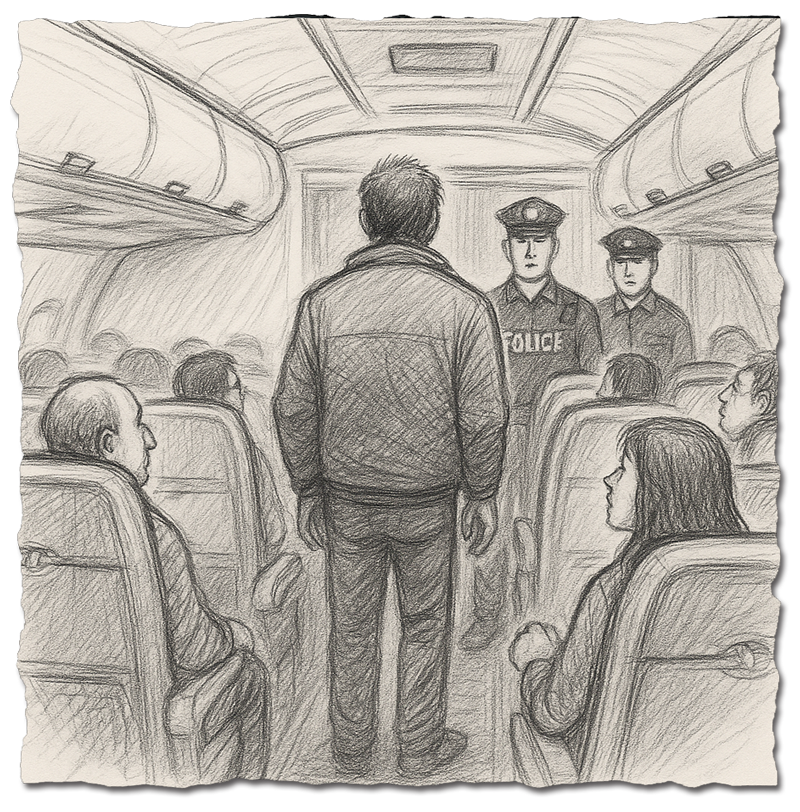
When we landed, the cabin lights stayed off. The usual rush to stand was cut short by a voice over the tannoid:
“Everyone remain seated.”
Of course, he stood up.
Police had already boarded the plane by the time everyone had sat down. They approached him, explained he was under arrest, and escorted him off without incident. We saw him again in the terminal, flanked by officers as we collected our luggage.
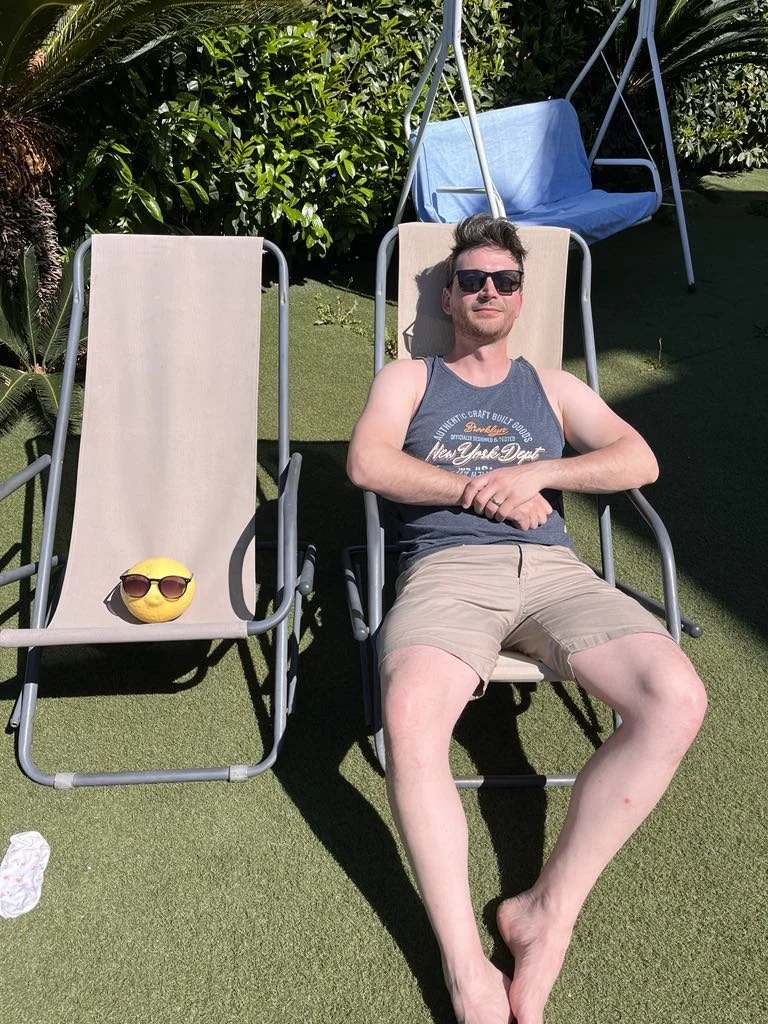
That final flight home rattled me more than I expected. Four hours of tension, watching every move of a man who might have flipped at any moment, left me with adrenaline still in my veins days later.
But once the fog cleared, something stuck.
Life is short. Too short to waste on things that don’t matter. Too short to follow someone else’s idea of what your life should look like. That flight reminded me how thin the line can be between ordinary and extraordinary, between going home and not getting there at all.
So here’s the takeaway: live it. Not tomorrow, not someday. Live it now, and live it your way.-
All photos unless otherwise stated are © Areas Grey Ltd. Unauthorized use is prohibited.

Written by:
Adam ‘Grey’ Cochrane
